

Dear Members:
There’s something important happening right now that deserves our attention.
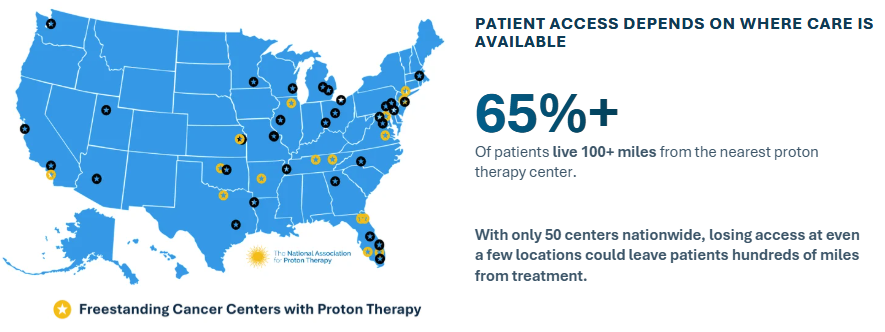
The Centers for Medicare & Medicaid Services (CMS) has proposed a new national payment methodology for proton therapy. According to the National Association for Proton Therapy (NAPT), the proposed reimbursement rates significantly underestimate what it actually costs to provide this highly specialized treatment. If the proposal is finalized as written, some freestanding proton centers could face serious financial challenges, potentially affecting patients’ access to proton therapy.
This is one of those times when our voices can make a difference.
NAPT is asking current and former proton therapy patients—as well as family members, providers, and supporters—to contact their U.S. Representative and urge them to protect access to proton therapy.
The good news is, the team at NAPT has made it incredibly easy: Click here to send a message directly to your U.S. Representative. Just enter your contact information, and the form will identify your representative and provide a pre-written message you can send as is—or you can edit it or write your own. I just did it myself, and it took one minute—even after I added my own message.
Those of us who’ve been part of the proton community know how important it is for patients to have access to this treatment option when it’s appropriate for them. We’ve spent more than 25 years educating men about proton therapy and encouraging patients to learn about all their options before making treatment decisions. But having options means little if patients can’t access them.
So my father, Bob Marckini, and I are asking our members to take a minute and make your voices heard. If proton therapy made a difference in your life, please help ensure that future patients have the same opportunity.

NOTE: Jennifer Maggiore, NAPT’s Executive Director, specifically asked me to share her personal email address with our members. She told me she’s always appreciated hearing directly from members of our group in the past—and, despite an extraordinarily busy time for NAPT, she genuinely wants to hear from you.
If you have questions, concerns, or simply want to share your thoughts with her, you can reach Jennifer directly at [email protected].
This month, we have another packed issue, with important developments in proton therapy and prostate cancer care, the next installment of our NCCN educational series, timely health information and, as always, a few surprises along the way.
In our News Report section, we cover several important developments in proton therapy and prostate cancer care. New clinical and laboratory research continues to build momentum for FLASH proton therapy, including encouraging early results in patients with painful bone metastases and new evidence that FLASH proton therapy may help protect the gut microbiome and reduce damage to healthy intestinal tissue. We also report on the first international consensus guidance for using proton therapy to reirradiate carefully selected men with recurrent prostate cancer, excellent long-term outcomes among younger men treated with proton therapy, and a promising new antibody being studied for metastatic prostate cancer. Finally, we take a closer look at Medicare Advantage and new research raising concerns about how some plans may limit access to cancer specialists and leading cancer centers.
Our Special Segment continues with Part 3 of our four-part NCCN educational series, “Understanding the Diagnosis.” This month, we break down some of the terms men encounter after a prostate cancer diagnosis—including Gleason score, Grade Group, clinical stage, risk category and other important biopsy findings—and explain how these pieces of information work together to help physicians assess a cancer and guide treatment decisions.
In Healthy Living, we look at the Cyclospora outbreak that has sickened thousands of Americans this summer and what you should—and shouldn’t—do to protect yourself when buying and preparing fresh produce. We also share important reminders about staying safe during extreme heat, particularly for older adults, and take a look at the surprisingly impressive nutritional benefits packed into a small handful of sunflower seeds.
As always, we truly welcome your feedback. Whether you have a comment, a question, or a personal experience that may help fellow members, we’d love to hear from you. Send an email to [email protected].
We hope you enjoy this month’s issue, and as always, thank you for being part of the BOB community.
Deb Hickey

📄 Prefer to print and read?
👉 Download the PDF here.

- FLASH Proton Therapy Continues to Build Momentum
- New Guidance on Proton Reirradiation for Prostate Cancer
- Excellent Long-Term Outcomes for Younger Men Treated with Proton Therapy
- FLASH Proton Therapy May Protect the Gut Microbiome
- Thinking About Medicare Advantage? Read This First.
- New Antibody Targets Metastatic Prostate Cancer
- Special Segment: Making Sense of Prostate Cancer
- Parasites in the Produce Aisle
- Staying Safe in Extreme Heat
-
Tiny Seeds, Big Health Benefits

FLASH Proton Therapy Continues to Build Momentum
We’ve written about FLASH proton therapy several times over the past few years because it has the potential to become one of the most significant advances in radiation oncology. In our Jan. 2024 issue, we introduced FLASH as a “potential major disruptor” in cancer treatment. In March 2025, we took a closer look at how the technology works and why researchers believe it may dramatically reduce damage to healthy tissue while maintaining the cancer-fighting power of radiation.
A new clinical study is providing encouraging evidence that FLASH proton therapy continues to move from the research laboratory toward patient care.
Researchers at the Cincinnati Children’s/University of Cincinnati Proton Therapy Center recently announced early results from the FAST-02 clinical trial, which evaluated FLASH proton therapy in adults with painful bone metastases in the chest. The treatment successfully relieved pain while researchers reported no treatment-related adverse events in the patients studied.
Unlike conventional radiation therapy, which delivers radiation over several minutes, FLASH delivers an ultra-high dose of radiation in less than a second. Researchers are still studying exactly why this ultra-fast approach appears to better protect healthy tissue, but laboratory and early clinical studies suggest it can do so while remaining highly effective at damaging cancer cells.
The FAST-02 trial was a small, early-stage clinical study evaluating FLASH proton therapy in patients whose cancers had spread to bones of the thorax, including the ribs, sternum, and shoulder blade. Participants had a variety of primary cancers—including prostate cancer—but all required radiation to relieve pain caused by these bone metastases. Although additional research is needed, the study represents another important milestone in the clinical development of FLASH proton therapy.

New Guidance on Proton Reirradiation for Prostate Cancer
When prostate cancer recurs after an initial course of radiation therapy, deciding how to treat it can be challenging. Because the bladder, rectum and other nearby tissues have already received radiation, doctors have traditionally been cautious about giving a second course of radiation. As a result, many men have instead been managed with androgen deprivation therapy (ADT), which lowers testosterone to help control prostate cancer. However, ADT can cause significant side effects.
To help guide these difficult treatment decisions, an international panel of experts from the Particle Therapy Co-Operative Group (PTCOG) has published the first consensus statement on the use of proton therapy for carefully selected patients who require a second course of radiation for recurrent prostate cancer.
The panel notes that advances in imaging, treatment planning, and proton therapy have made reirradiation more feasible than in the past. Because proton beams stop at the target rather than passing completely through the body, they may better spare the bladder, rectum, and other normal tissues that have already received radiation.
The experts emphasize that proton reirradiation isn’t yet considered standard of care and that published clinical data remain limited. However, they conclude that proton therapy should be considered for appropriately selected patients with localized or regional recurrence after prior radiation.
The consensus statement supports an individualized approach to proton reirradiation rather than a one-size-fits-all strategy. It also addresses the role of advanced imaging, rectal spacers, and whether treatment should target the entire prostate or only the recurrent tumor. The authors conclude that additional prospective clinical trials are needed to determine which patients are most likely to benefit.
Excellent Long-Term Outcomes for Younger Men Treated with Proton Therapy
About six in 10 prostate cancers are diagnosed in men age 65 or older. But for men diagnosed at a younger age, preserving quality of life while achieving long-term cancer control is especially important because they have many decades of life ahead of them.
Researchers at the University of Florida Health Proton Therapy Institute recently reported long-term outcomes for 85 men who were 50 years old or younger when they received proton therapy for localized prostate cancer. Patients were followed for a median of 12.3 years, making this one of the longest follow-up studies of younger men treated with proton therapy.
The results were encouraging. Cancer control exceeded 90% across all risk groups, including 100% for men with low-risk and very low-risk disease. Overall, 95.4% of patients remained free from biochemical recurrence 10 years after treatment. During follow-up, only three men experienced biochemical recurrence, one developed a regional lymph node recurrence, and there were no local recurrences or distant metastases.
Long-term side effects were also uncommon. Severe (Grade 3 or higher) urinary side effects occurred in 2.4% of patients, while moderate or worse (Grade 2 or higher) bowel side effects occurred in 2.4%. Patient-reported urinary and bowel quality of life remained largely stable over time, although sexual function declined over the years, a finding commonly observed following prostate cancer treatment regardless of treatment approach.
The investigators also looked for second cancers that could potentially be related to radiation exposure. Two patients developed new cancers during follow-up, but both occurred outside the radiation treatment field, suggesting they were unlikely related to proton therapy.
The authors conclude that proton therapy provided excellent long-term cancer control with a low risk of serious side effects in this group of younger men. However, they also note several important limitations, including the relatively small number of patients and treatment at a single institution. Larger, multi-institutional studies are needed to confirm these findings.
FLASH Proton Therapy May Protect the Gut Microbiome
Researchers at the University of Kansas Medical Center have uncovered new evidence that may help explain why FLASH proton therapy appears to cause less damage to healthy tissue than conventional radiation.
In a recent study, scientists compared FLASH proton therapy with conventional proton therapy in mice. They found that FLASH-treated animals experienced significantly less intestinal injury. FLASH also better preserved the gut microbiome—the community of beneficial bacteria that plays an important role in digestion, immune function, and overall health.
Mice receiving FLASH also retained more intestinal stem cells and showed reduced inflammation, suggesting that the body’s natural repair mechanisms remained more intact following treatment. The researchers believe these findings may be interconnected, with preservation of the microbiome helping to protect healthy tissues from radiation-related damage.
Although additional research is needed, the study provides new insight into the biological mechanisms behind FLASH proton therapy. The findings suggest that protecting the microbiome may contribute to its ability to reduce side effects while maintaining its effectiveness against cancer.
Thinking About Medicare Advantage? Read This First.
Over the past several years, we’ve encouraged our readers to carefully compare Medicare Advantage plans before enrolling. Since many of our members joined after those articles were published, we wanted to share an important update.
Today, nearly 34 million Americans—about half of all Medicare beneficiaries—are enrolled in Medicare Advantage plans. With so many people relying on these plans for their healthcare coverage, understanding how they may affect access to cancer care is more important than ever.
In previous issues, we’ve outlined several potential concerns associated with some Medicare Advantage plans, including:
- Narrow provider networks that may limit access to certain physicians, hospitals, and treatment centers
- Prior authorization requirements that can delay or complicate access to recommended care
- The importance of confirming that your preferred oncologist, radiation oncologist, hospital, or proton therapy center is in-network before enrolling or switching plans
- Looking beyond monthly premiums and carefully comparing overall coverage before making a decision
A newly published study in JAMA Network Open provides additional evidence supporting many of these concerns. Researchers analyzed healthcare utilization for more than 800,000 Medicare Advantage beneficiaries with cancer and found that, compared with beneficiaries enrolled in Traditional Medicare, Medicare Advantage patients accessed a substantially smaller share of oncology organizations, medical and surgical oncologists, and radiation oncologists. The study also found that fewer than one-quarter of Medicare Advantage plans included adequate access to National Cancer Institute (NCI)-designated Comprehensive Cancer Centers—leading cancer centers that conduct advanced research and offer specialized treatments and clinical trials.
It’s important to note that this study analyzed Medicare claims from 2016 through 2019. While provider networks may have changed since then, many of the same Medicare Advantage insurers and plan structures remain in place today. The study offers a valuable real-world look at how these networks worked for cancer patients and reinforces the importance of carefully reviewing provider networks before choosing a plan.

New Antibody Targets Metastatic Prostate Cancer
Scientists have developed a fully human antibody that significantly slowed tumor growth and metastatic spread in laboratory studies and in mice implanted with human prostate cancer cells.
The experimental treatment, called mAbF11, targets a signaling pathway involved in the growth and spread of metastatic castration-resistant prostate cancer (mCRPC). In the study, the antibody produced results in the mice comparable to those of docetaxel, a chemotherapy drug commonly used to treat advanced prostate cancer. Encouragingly, however, mAbF11 did not cause the adverse effects observed with docetaxel in the study.
The findings are promising, particularly because mCRPC is difficult to treat once it progresses despite hormone therapy. But there’s an important caveat: mAbF11 has not yet been tested as a prostate cancer treatment in humans. Additional safety studies and regulatory steps will be necessary before clinical trials can begin.
So, while this isn’t a new treatment option today, it’s an interesting development—and one we’ll be watching.

Making Sense of Prostate Cancer
The National Comprehensive Cancer Network (NCCN) is one of the world’s leading authorities on cancer care. Its evidence-based clinical practice guidelines help physicians make informed decisions about cancer screening, diagnosis, and treatment. NCCN also publishes patient-friendly versions of these guidelines to help individuals and families better understand each step of the journey.
In the first two installments of this four-part series, we explored prostate cancer screening and what often happens after an elevated PSA, including repeat PSA testing, MRI scans, biomarker tests, and prostate biopsies.
Once a biopsy confirms prostate cancer, many men are left wondering what the biopsy findings actually mean. What is a Gleason score? What does Grade Group 2 or T2 disease mean? How do doctors determine whether a cancer is considered low risk or high risk?
In this installment, we'll explain the key findings in a prostate cancer pathology report and how each one helps doctors understand how aggressive a cancer appears to be. By the end, you'll have a better understanding of what these findings mean and how they fit together to paint a more complete picture of your cancer.
Part 3: Understanding the Diagnosis
If you’ve recently been diagnosed with prostate cancer, your pathology report may contain medical terms that are unfamiliar to you, such as Gleason score, Grade Group, clinical stage, and NCCN risk category. While these terms and classifications can seem overwhelming, they each provide important information about your cancer. Together, they help physicians estimate how aggressive the cancer appears to be and recommend the most appropriate treatment.
Although every pathology report is unique, most contain the same core pieces of information. Understanding what each of these terms means can help you have more informed discussions with your healthcare team and better understand why one treatment may be recommended over another.
The Pathology Report
After your biopsy, the tissue samples are sent to a pathologist—a physician specially trained to diagnose disease by examining cells and tissues under a microscope. The pathologist carefully evaluates each sample and prepares a pathology report that describes the characteristics of the cancer. Although every report is unique, most contain the same key findings that physicians use to evaluate how aggressive the cancer appears to be.
What’s Included in a Typical Pathology Report?
- Gleason score
- Grade Group
- Number of positive biopsy cores
- Percent involvement of each positive core
- Perineural invasion
Consider a Second Opinion
Although pathologists use well-established grading criteria, interpreting prostate biopsy specimens involves professional judgment. Even experienced pathologists may occasionally differ in how they assign a Gleason score or Grade Group, particularly when the findings fall near the boundary between two grades.
Because these results play such an important role in treatment decisions, many experts recommend having your biopsy slides reviewed by a pathologist who specializes in prostate cancer before making a final treatment decision. In some cases, a second opinion may result in a different Gleason score or Grade Group, which could influence your treatment options.

Gleason Score
One of the most important pieces of information in your pathology report is your Gleason score. It is determined by examining the pattern of cancer cells under a microscope. Rather than measuring the size of the tumor, the Gleason score helps estimate how aggressive the cancer appears to be and how likely it is to grow and spread.
When a pathologist examines your biopsy samples, the cancer cells are assigned a Gleason pattern based on how abnormal they appear. The patterns range from 3 to 5, with Pattern 3 being the least aggressive and Pattern 5 the most aggressive.
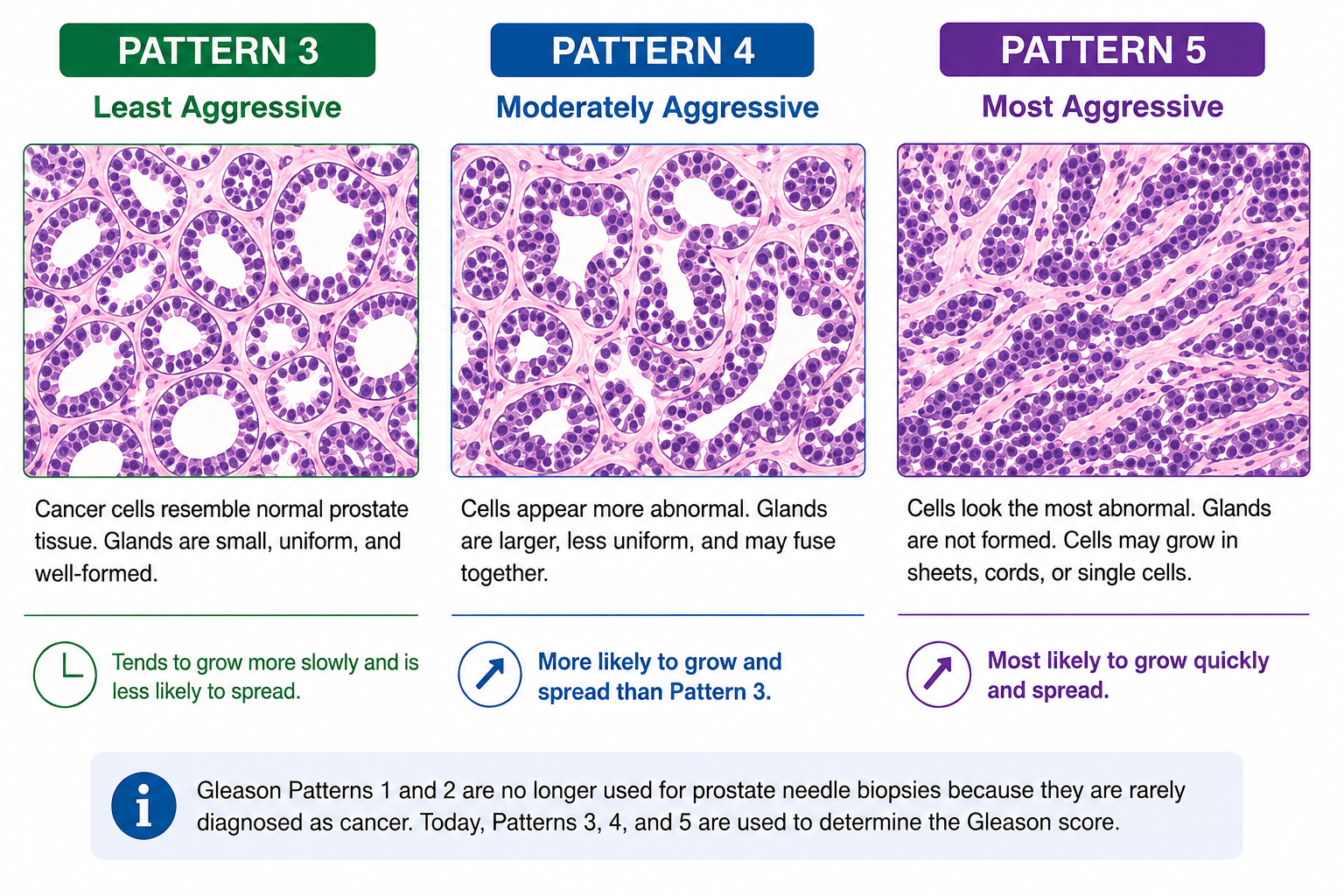
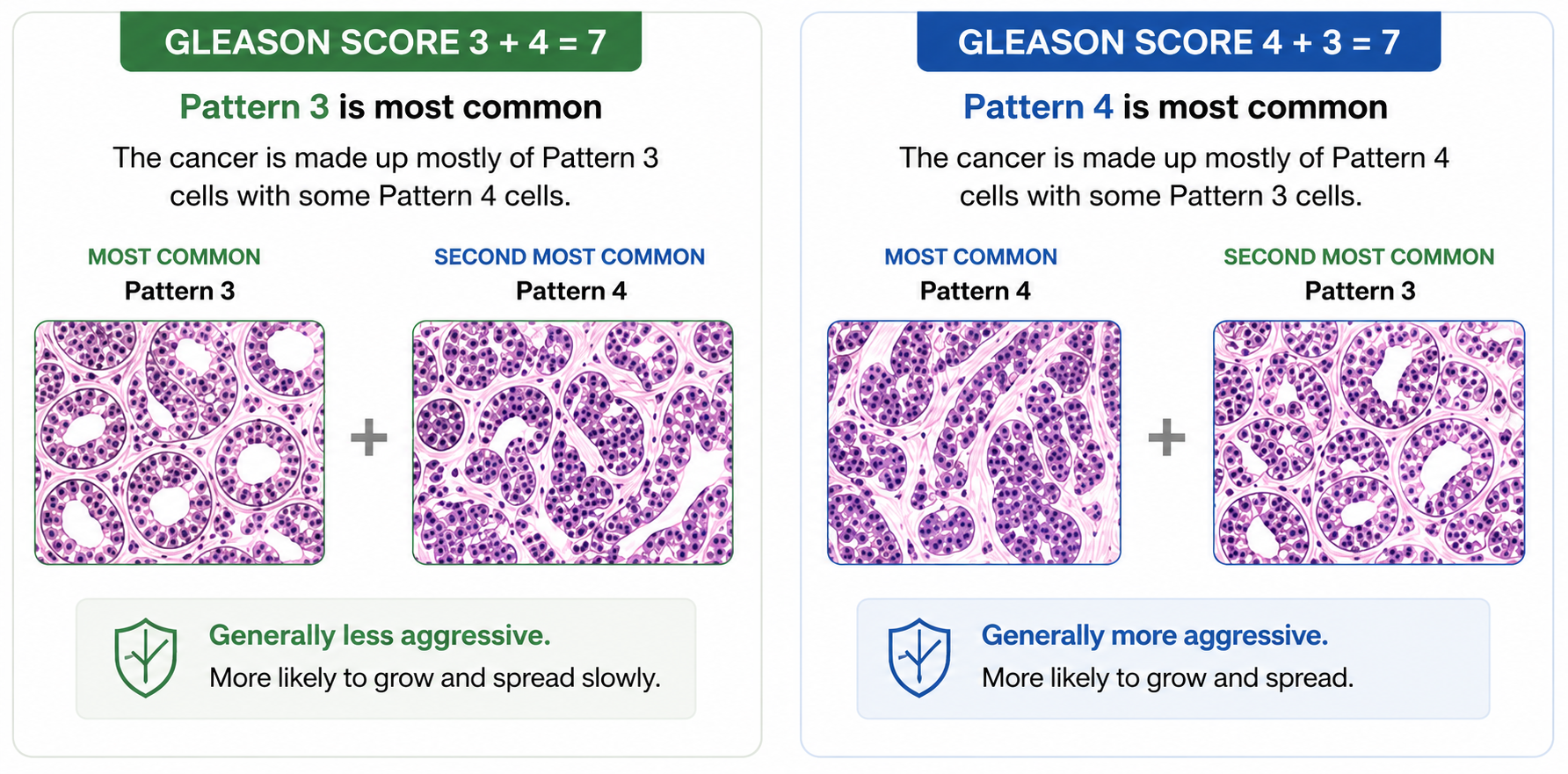
Most prostate cancers contain more than one Gleason pattern. The pathologist identifies the most common pattern in the biopsy and the second most common pattern, then adds those two numbers together to determine the Gleason score. For example, if Pattern 3 is the most common and Pattern 4 is the second most common, the Gleason score is 3 + 4 = 7.
Although 3 + 4 and 4 + 3 both add up to 7, they are not considered the same. The first number always represents the pattern that makes up the largest portion of the cancer. A 3 + 4 tumor is composed mostly of the less aggressive Pattern 3 cells, whereas a 4 + 3 tumor is composed mostly of the more aggressive Pattern 4 cells. As a result, 4 + 3 cancers generally behave more aggressively than 3 + 4 cancers.
Grade Groups
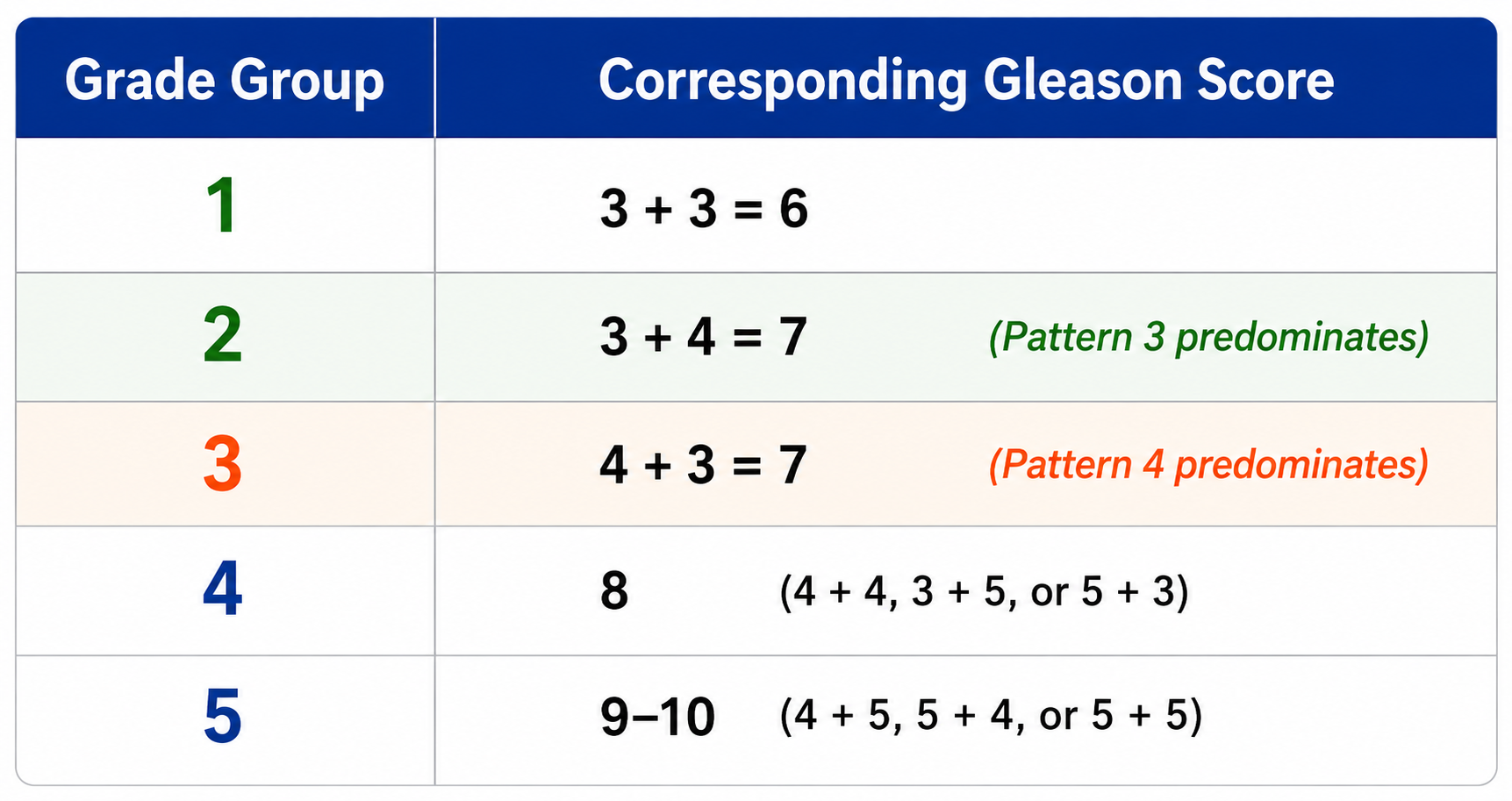
Although the Gleason score has been used for decades, many patients found it confusing. For example, the lowest Gleason score assigned to prostate cancer today is 6, which can sound more serious than it actually is. To make prostate cancer grading easier to understand, doctors also use a simpler system called Grade Groups.
Clinical Stage
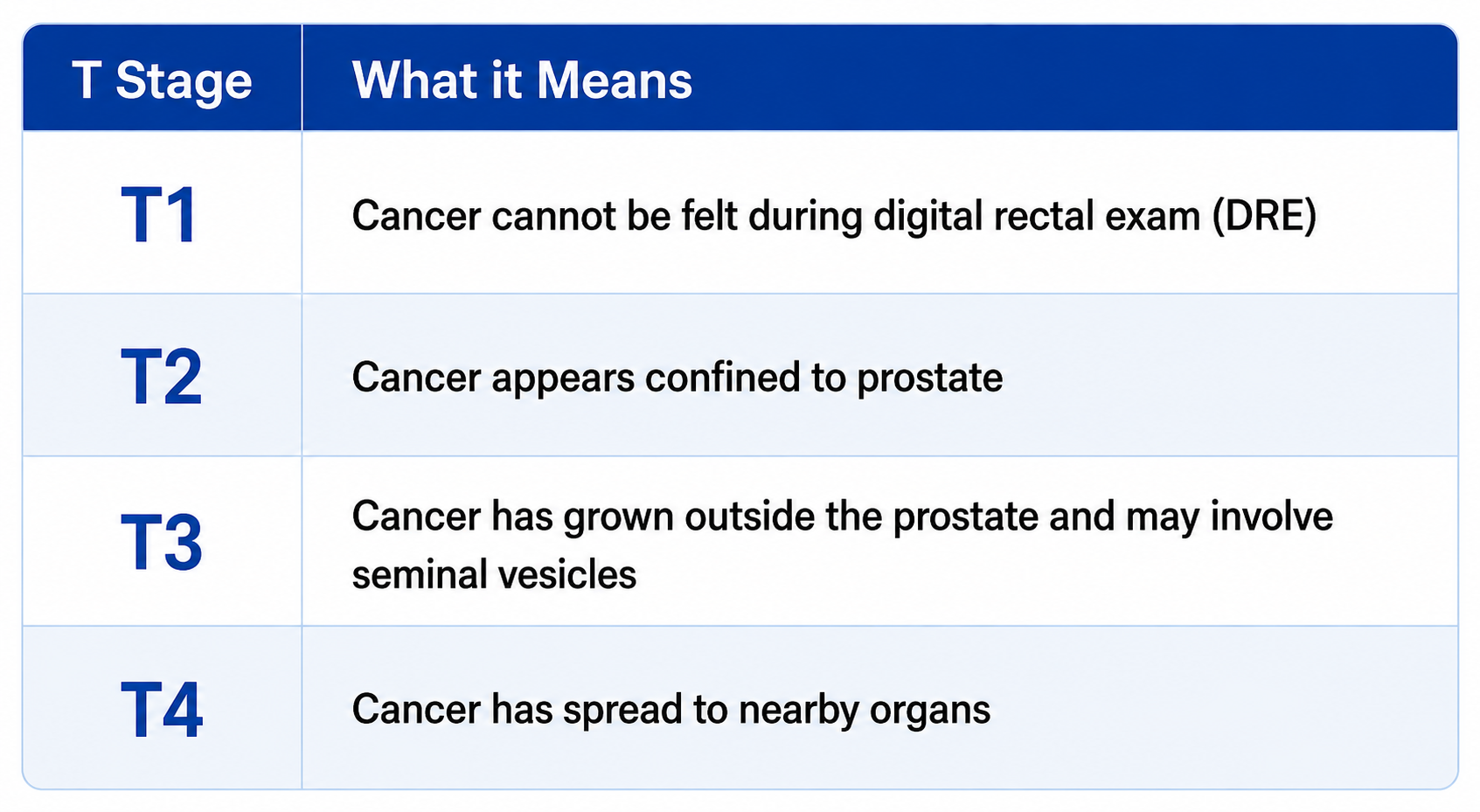
Clinical stage refers to the extent and severity of the cancer. It’s determined by digital rectal exam (DRE) and imaging tests. Along with the PSA level and Grade Group, it helps guide treatment decisions. Clinical stage for prostate cancer is categorized from T1 to T4. In general, the higher the T stage, the farther the cancer has extended beyond the prostate.
Risk Groups
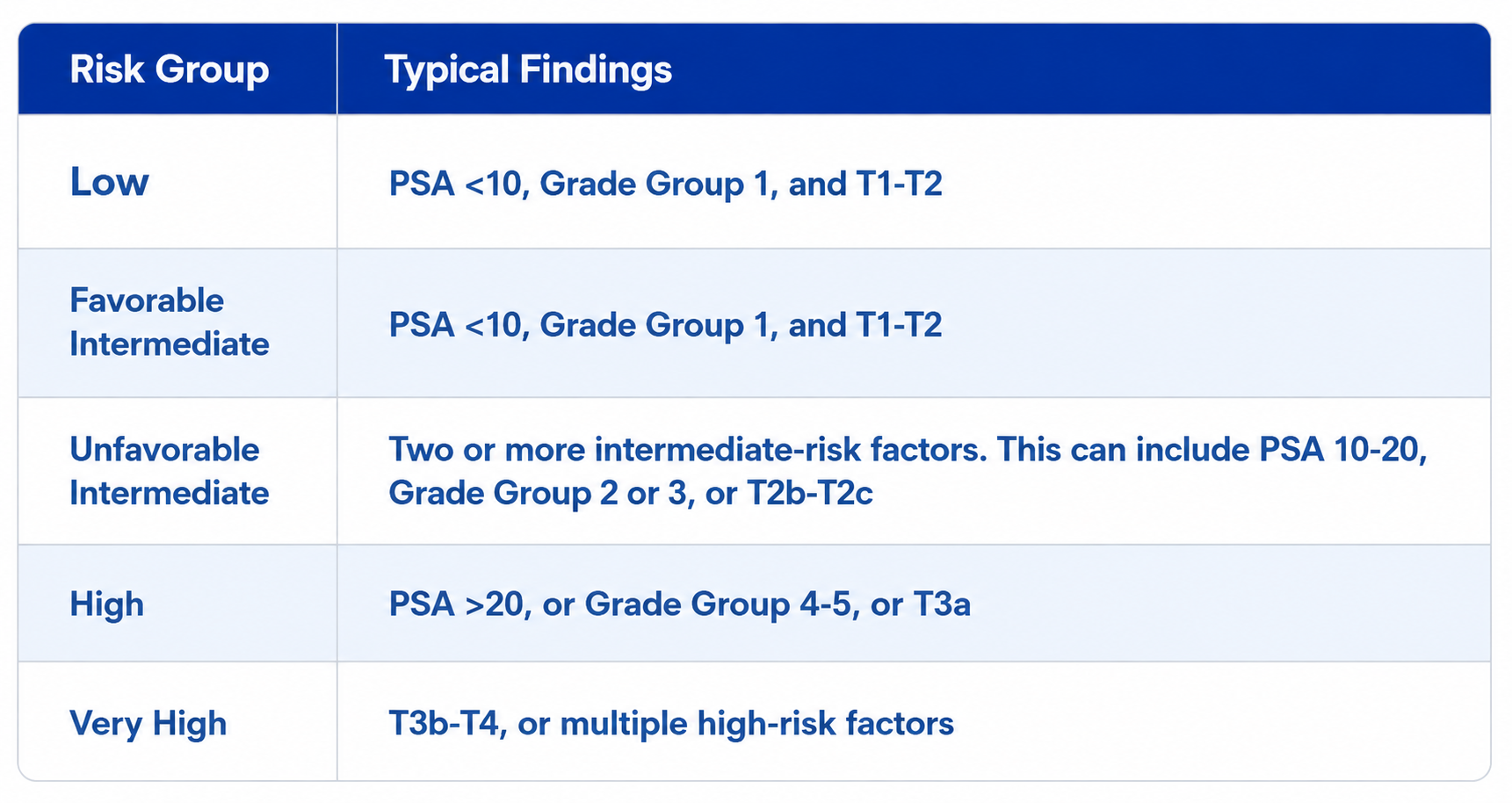
Doctors don’t base treatment decisions on just one piece of information. Instead, they combine the PSA level, Grade Group, and clinical stage to classify prostate cancer into a risk group. The risk group helps estimate how likely the cancer is to grow or spread and plays an important role in choosing the most appropriate treatment.
Other Important Biopsy Findings
In addition to the Gleason score, Grade Group, and clinical stage, your biopsy report may include several other findings. While these don’t determine treatment on their own, they provide additional information that helps doctors assess the cancer and plan your care.
Positive Cores: The number of biopsy samples (cores) that contain cancer. In general, more positive cores may indicate a greater amount of cancer, but this is only one factor doctors consider.
Percent Involvement: The percentage of each biopsy core that contains cancer. A core with 20% involvement contains less cancer than one with 90% involvement.
Perineural Invasion (PNI): Cancer cells are found around small nerves within the prostate. PNI is one factor doctors consider, but it does not determine treatment by itself.
Putting it All Together
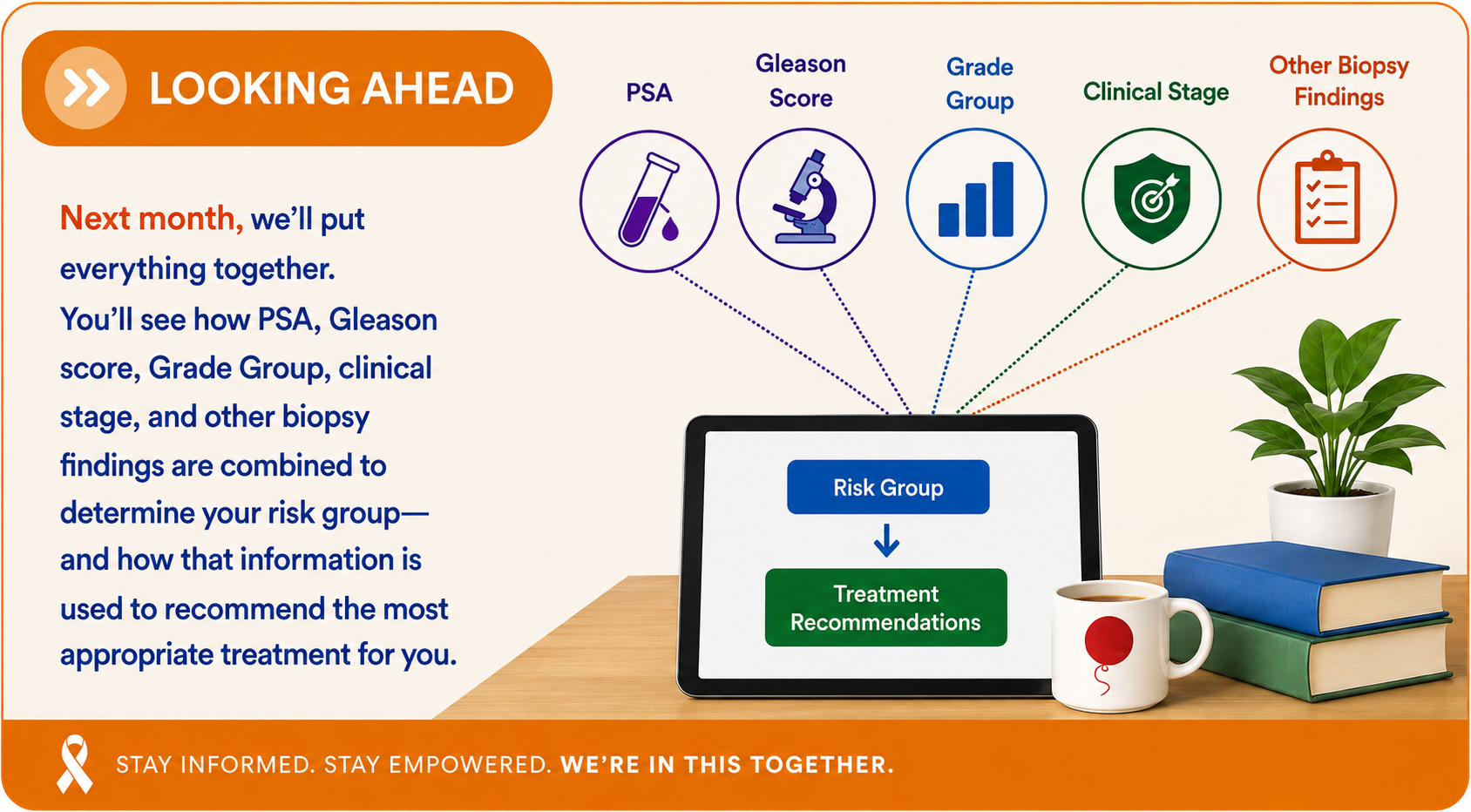
No single test result tells the whole story. Doctors consider your PSA level, Grade Group, clinical stage, and other biopsy findings together when making treatment recommendations. In the final installment of this series, we'll explain how they use this information—along with your age, overall health, and personal preferences—to develop a treatment plan tailored to you.

Parasites in the Produce Aisle
By now, you’ve probably heard of Cyclospora, the microscopic parasite making news this summer after a massive outbreak linked to ice-berg lettuce sickened thousands of people across the country.
But this isn’t Cyclospora’s first trip through the American produce aisle. Outbreaks have been investigated in the U.S. almost every year since the mid-1990s, with illnesses linked over the years to raspberries, basil, cilantro, vegetable trays and bagged salads.

How to Protect Yourself
The CDC’s warning is specific to the current outbreak: Don’t eat the recalled iceberg lettuce from Taylor Farms de Mexico. If you purchased this brand of lettuce, throw it away or return it. That’s it. There’s no need to avoid lettuce or fresh produce in general.
What should you do if you’re worried about future Cyclospora outbreaks? Follow the FDA’s advice for washing produce: rinse fruits and vegetables thoroughly under cool running water. But understand that washing doesn’t eliminate the risk entirely. Cyclospora can cling to produce, and even chlorine and other commonly used antimicrobial treatments aren’t particularly effective against it. So, while proper washing is still important, there’s no way to guarantee that fresh produce is completely free of Cyclospora.
What about those produce-washing sprays and solutions advertised online and on TV? Skip them. The FDA does not recommend washing fruits and vegetables with soap, detergent or commercial produce washes. Plain running water is the recommendation —and when it comes to Cyclospora, no special produce wash has been shown to reliably remove the parasite.
What about frozen produce? Freezing shouldn’t be counted on to make contaminated produce safe either. Cooking, when practical, is more effective—the FDA says Cyclospora cannot survive at temperatures of 158°F (70°C) or higher.
That’s why, if the FDA or CDC recalls a specific food because of Cyclospora, you shouldn’t try to wash it clean. The safest choice is to avoid it altogether.
What if You Get Sick?
Cyclospora infects the small intestine and most commonly causes frequent watery diarrhea, along with possible cramping, bloating, nausea, fatigue and weight loss. Symptoms usually begin about a week after infection and, untreated, can linger for weeks or disappear and return.
If you develop prolonged watery diarrhea—especially following a known outbreak exposure—contact your healthcare provider and mention Cyclospora specifically. The CDC notes that routine stool testing doesn’t always include it, so a specific test may be necessary. The infection is treatable with prescription medication.
Keep It in Perspective
Cyclospora outbreaks make headlines, but the illness remains relatively uncommon in the U.S. In 2025, fewer than 4,000 cases were reported nationwide—roughly one reported case for every 86,000 Americans. So pay attention to recalls; wash your produce and follow normal food-safety practices, but there’s no reason to stop eating fruits and vegetables.
Staying Safe in Extreme Heat
A recent Harvard study involving more than 73 million older Americans found that heat waves significantly increase the risk of death among adults age 65 and older. As temperatures continue to climb across much of the country, the findings serve as an important reminder that extreme heat can be more than just uncomfortable—it can become dangerous.

While anyone can be affected, older adults and people with chronic medical conditions are especially vulnerable. Drinking plenty of water, taking breaks in the shade or an air-conditioned space and avoiding strenuous outdoor activity during the hottest part of the day can go a long way toward preventing heat-related illness.
Early warning signs of heat exhaustion include heavy sweating, dizziness, headache, muscle cramps, nausea, fatigue, and a rapid pulse. If these symptoms develop, move to a cool, shaded, or air-conditioned place, drink fluids, and rest. If symptoms worsen—or if someone becomes confused, stops sweating, loses consciousness, or develops a body temperature of 104°F or higher—call 911 immediately. These are signs of heat stroke, a life-threatening medical emergency.
The best defense is prevention. Stay well hydrated, wear lightweight clothing, check on family members, neighbors, and anyone who may be vulnerable during heat waves, and never leave children or pets in a parked vehicle. On very hot days, keep pets indoors as much as possible and avoid leaving them outside for extended periods, even with access to shade and water. A little extra caution can help you and your loved ones stay healthy all summer long.
Tiny Seeds, Big Health Benefits
Looking for a simple way to add more nutrients to your diet? Consider sunflower seeds. They’re packed with healthy fats, fiber, Vitamin E, magnesium and phytosterols, which can help reduce cholesterol absorption. Research suggests that eating nuts and seeds is associated with a lower risk of cardiovascular disease and may help improve cholesterol levels.
Sunflower seeds are especially rich in Vitamin E, an antioxidant that helps protect cells from damage, and provide selenium, which supports thyroid function and immunity. There’s also some evidence of potential anti-inflammatory and blood-sugar benefits, although more research is needed.

One caution: an ounce—roughly a small handful—contains about 160 to 170 calories. Choose unsalted or lightly salted varieties when possible. Sprinkle them on salads, yogurt, oatmeal or vegetables, or grab a small handful as a snack. For something so tiny, they pack an impressive nutritional punch.

Why We Give
One of the most meaningful parts of what we do is personally calling members who choose to give back to Loma Linda University Health and thanking them for their generosity. Some of their gifts support proton research and innovation—continuing the groundbreaking work begun decades ago by James M. Slater, MD and Jerry Slater, MD, who pioneered the field of proton therapy at Loma Linda University Cancer Center. Other gifts support LLUH’s “Stronger Together” campaign, a $310 million initiative aimed at advancing cancer research, expanding patient care programs, and accelerating the development of next-generation treatments and technologies. And some gifts are purposefully designated as “unrestricted,” allowing funds to be directed wherever the need is greatest.
Most of these donors were treated at LLUCC themselves. However, many members who give to LLUH received proton therapy at one of the nearly 50 centers now operating across the country. They give because they recognize the important role Loma Linda+ played in pioneering proton therapy in a hospital-based clinical setting and helping expand access to the treatment nationwide.
No matter where they were treated or what inspired their gift, the conversations we have with these members are often thoughtful, personal, and deeply heartfelt. Following are just a few reflections shared with us over the past several months.
- I’ve been fortunate to do very well since my proton treatment, and I’ve always believed you should find a way to help the people who make a difference in your life. — BOB Member, Sun City, AZ
- I’ll never forget how scared I felt when I was first diagnosed with “the Big C.” The Brotherhood of the Balloon changed that for me. In less than an hour, I had a list of 200 former proton patients that were willing to share their experiences with me. After speaking with five of them, I called Loma Linda for a consult and the rest is history. If my gift helps even one newly diagnosed man feel a little less scared, it’s worth it. — BOB Member, Jackson, WY
- When you go through cancer treatment, you never forget the people who gave you hope. — BOB Member, Greenville, SC
- Proton therapy was a gift to my wife and to me. And we had the time of our lives for those two months. Continuing to give to Loma Linda became something very meaningful to our family. — BOB Member and Spouse, Yucaipa, CA
- I’ll never meet the person who benefits from my gift, and that’s okay. Someone I never met helped make proton therapy available when I needed it. I only wish I were able to give more. But if what I can give today helps make an even better treatment possible for someone who needs it tomorrow, that’s reason enough for me. — BOB Member, Eldridge, IA
-
As you know, I originally wanted to make a donation directly to you and your father to thank you for everything you do—from writing the book that led me to proton therapy to producing the outstanding 25-page newsletter I look forward to reading every month—all at no cost to readers! I can only imagine the time you also spend answering emails from members!
When I offered to donate to the BOB, you told me you don’t accept donations and instead suggested that I support Loma Linda. I was happy to do so. Without Loma Linda, I wouldn’t be living the healthy, active life I enjoy today, and I’m grateful for the care I received there. — BOB Member, San Bernardino, CA

Your Gift. Their Future.
Make a gift online and choose where you’d like it to go:
- Cancer Center Vision / Stronger Together Campaign
- Proton Research – James M. Slater Chair
- Proton Research – Robert J. Marckini Chair
- Other (specify area or write “unrestricted” for greatest need)
Send a check to “LLUCC.” Specify where you’d like to direct your gift in the memo line and mail to: LLUH Office of Philanthropy | P.O. Box 2000 | Loma Linda, CA 92354
Call 909-558-5010 to make a gift or ask questions.

Become Your Own Advocate
When Bob Marckini wrote You Can Beat Prostate Cancer, his goal wasn’t simply to convince men to choose proton therapy. It was to give newly diagnosed men the information and confidence they needed to make an informed treatment decision for themselves.
In fact, Bob readily acknowledges his own bias toward proton therapy. After all, it was the treatment he chose, and he went on to lead a support group of thousands of men who made the same choice. But he also makes something else very clear:
“I do not think it’s for everybody.”
That distinction is important.
When Bob was diagnosed in 2000, he consulted physicians from several different specialties. His urologist recommended surgery. A radiation oncologist recommended external-beam radiation. A brachytherapy specialist told him he was “the poster boy for brachytherapy.” And the physician he consulted about cryosurgery believed freezing the prostate was the right choice.
Bob found himself asking an obvious question: How could all these very different treatments be the best treatment for the same patient?
His conclusion became one of the central messages of the book:
“No single treatment is best for everybody.”
So, Bob did something that wasn’t nearly as common for patients at the time. He took charge of the decision himself. He researched his options, sought out different specialists, talked with former patients, asked questions about side effects and quality of life, and weighed what mattered most to him. As he writes in the book, the only way he could know what was best for him was to “jump in with both feet” and learn everything he could about each option.
Why That Message Matters Now More Than Ever
Today, men diagnosed with prostate cancer have access to more information, more sophisticated diagnostic tools, and an evolving range of treatment approaches. That’s enormously good news. But having more information doesn’t necessarily make a life-changing decision easier.
It makes Bob’s message just as relevant today:
Educate yourself. Ask questions. Seek different perspectives. Understand the potential benefits and tradeoffs of each treatment option. And become an active participant in your own care.
More than two decades after Bob began his own prostate cancer journey, perhaps the most enduring message of You Can Beat Prostate Cancer isn’t simply that proton therapy can be an excellent treatment option. It’s that the best decision is an informed one—and every patient deserves to be part of making it.
Did Bob’s Book Make a Difference for You?
Over the years, we’ve heard from countless men who discovered Bob’s book at one of the most pivotal moments of their lives—often just after hearing the words, “You have prostate cancer.” Some say it helped them understand the confusing language, sort through treatment options, and know what questions to ask. Others say it led them to proton therapy or simply gave them confidence to take their time and choose what was right for them.
If Bob’s book played a part in your story, we’d love to hear about it. No matter how long ago you read it, did You Can Beat Prostate Cancer help you feel more confident about the decision you ultimately made? Tell us about it.
And if you haven’t already, please consider writing a review on Amazon. Your story doesn’t have to be long or dramatic. A few honest sentences about how the book helped you may be exactly what another man—newly diagnosed, overwhelmed, and unsure what to do next—needs to read as he begins making decisions of his own.

Last Month’s Brain Teaser
Cybersecurity Quiz: True or False?
- A longer password is generally more secure than a shorter password with lots of symbols.
- Using the same password for multiple websites is safe if the password is strong.
- Your email account is one of the most important accounts to secure.
- Security experts recommend changing all your passwords every month.
- Password managers can generate stronger passwords than most people create on their own.
Answers:
- TRUE — A longer password is generally more secure than a shorter, complicated one.
- FALSE — Reusing even a strong password puts multiple accounts at risk if one site is breached.
- TRUE — Your email account is especially important to protect because it can often be used to reset passwords for your other accounts.
- FALSE — Experts generally do not recommend routinely changing strong passwords every month. Change them if they're weak, reused, or you suspect they've been compromised.
- TRUE — Password managers can generate long, unique, random passwords that are typically much stronger than passwords people create themselves.
*The answers are based on current cybersecurity guidance from the Federal Trade Commission (FTC) and the National Institute of Standards and Technology (NIST).
Winner:
Congratulations to our anonymous July/Aug Brain Teaser winner from Garland, TX! When we told him he’d won, he responded: I can’t believe I won. I never win anything! We’re happy to have changed that. Congratulations! Your signed copy of Bob Marckini’s book, You Can Beat Prostate Cancer, is in the mail!
New Brain Teaser

Send your answer(s) to [email protected] for a chance to win a signed copy of Bob Marckini’s second edition book, You Can Beat Prostate Cancer.

Funnies…
Marital Bliss
A man asked his wife, “What would you do if I won the lottery?”
She replied, “I’d take half and leave you.”
“Great,” he said. “I won $12. Here’s six bucks. Stay in touch.”
My wife asked if she could have a little peace and quiet while she cooked dinner... So I took the batteries out of the smoke alarm!
A wife, being the romantic sort, sent her husband a text: “If you are sleeping, send me your dreams. If you are laughing, send me your smile. If you are eating, send me a bite. If you are drinking, send me a sip. If you are crying, send me your tears. I love you!”
The husband, typically non-romantic, replied: “I’m on the toilet. Please advise.”
Choose Your Words Carefully
So, I’m having lunch at the diner, and two very large women with accents are sitting across from me. I say, “Cool accents. Are you two ladies from Scotland?”
One of them yells, “It’s Wales, you idiot!”
So I said, “Okay, are you two whales from Scotland?”
I don’t remember much after that.
Regular as Clockwork
A man told his doctor, “Every morning at 7:00, I have a bowel movement.”
The doctor said, “That sounds perfectly healthy.”
The man replied, “It would be, except I don’t wake up until 8:00.”

The Asteroid That Could Hold the Heart of a Lost World
Orbiting the Sun between Mars and Jupiter is an unusual asteroid called 16 Psyche. Discovered in 1852, it was named after Psyche, the Greek goddess of the soul. The “16” simply means it was the 16th asteroid ever discovered.
Psyche has made headlines because some estimates have placed the theoretical value of its metals in the hundreds of quintillions of dollars, leading to claims that it could be the most valuable object in our solar system.
But there’s a catch.
Those estimates assume someone could actually bring all that metal back to Earth. If enormous quantities of iron, nickel and other metals suddenly became available, their value would plummet. So scientists aren’t interested in Psyche because it might be a cosmic gold mine. They’re interested because it may be something far more extraordinary.
Scientists think the metal-rich asteroid could contain material from the core of a planetesimal—a building block of an early planet. One possibility is that violent collisions billions of years ago stripped away much of its outer material, exposing part of its metallic interior. But scientists don’t yet know exactly how Psyche formed—and finding out is one of the primary goals of NASA’s mission.
If Psyche does contain material from the interior of an early planetary body, it could offer an opportunity we can never have on Earth. Our planet’s metallic core begins nearly 1,800 miles beneath our feet, far beyond our ability to reach. Psyche could give scientists a rare chance to study similar material up close and learn more about how rocky planets like Earth formed.
To find out what Psyche really is, NASA launched the Psyche spacecraft in 2023. This past May, the spacecraft successfully flew past Mars, using the planet’s gravity to boost and redirect it toward the asteroid. It’s now continuing its journey to Psyche, where it’s expected to arrive in 2029. The spacecraft will spend about two years orbiting the asteroid, mapping its surface and collecting data to determine its composition and history.
Sometimes the greatest treasure isn’t measured in dollars. Sometimes it’s the chance to unlock the secrets hidden at the center of a world—and perhaps better understand our own.
Did You Know…
Scientists are working on toothpaste made from hair. Researchers at King’s College London found that keratin extracted from hair or wool can form a protective crystalline coating on teeth that resembles enamel and may help repair early damage. The researchers envision it eventually being used in toothpaste or a dental gel.
Horseshoe crabs have blue blood—and we use it to keep medicine safe. Their blood is blue because it uses copper-containing hemocyanin rather than iron-containing hemoglobin. For decades, a substance derived from their blood has been used to detect dangerous bacterial contamination in medicines and medical devices. Oh, and they're about 445 million years old as a lineage.
There was a baby born in 2025 from an embryo frozen in 1994. The embryo had been frozen for more than 30 years before being transferred and ultimately resulting in a birth. The couple who eventually had the baby were themselves young children when the embryo was originally created.
Wombats poop cubes. Wombats are the only known animals that produce cube-shaped poop. And no, they don't have square-shaped anatomy at the exit. Scientists found that sections of the wombat’s intestine have different thicknesses and stiffness, which helps mold the waste into flat sides and corners as it moves through the gut.

Orcas make tools—and give each other massages. Researchers observed killer whales biting off pieces of kelp, positioning the pieces between themselves and another whale, and then rubbing against one another. In other words, they're apparently making kelp tools for mutual grooming.

The Good Old Days
We all have them—the years we look back on and think, Those were the good old days.
Maybe it was when the kids were young. A favorite vacation. Holidays when everyone was still around the table. Summer nights with old friends. Or simply a time when life somehow seemed a little easier.
But we probably didn't realize they were the good old days while we were living them.
At the time, they were ordinary days filled with ordinary things. There were bills to pay, errands to run, lawns to mow and plenty to worry about. We didn't know which moments would someday become the ones we'd miss.
And that's worth thinking about—because the same thing is happening right now.
The morning coffee with your spouse. A phone call from an old friend. Dinner with your children or grandchildren. A walk with the dog. A conversation with a stranger that makes you smile. Sitting outside on a beautiful evening with nowhere else you need to be.
Most of these moments don’t seem particularly important while they’re happening. But today’s ordinary moments are quietly becoming tomorrow’s memories.
We can’t go back and relive the good old days. But perhaps we can get a little better at recognizing them while they’re happening.
Low PSAs to all,
Bob Marckini and Deb Hickey
Want a printable version of this issue?
👉 Download the PDF here.
NO MEDICAL ADVICE: Material appearing here represents opinions offered by non-medically trained laypersons. Comments shown here should NEVER be interpreted as specific medical advice and must be used only as background information when consulting with a qualified medical professional.