

Dear Members:
Summertime. Love is in the air. Literally.
I have never seen so many birds having babies in my life. We have an artificial boxwood wreath on our front door, and this is the third nest this season built in it by what I believe are house finches.

That’s both good and bad.
My 15-year-old daughter and I have been completely obsessed with watching the eggs hatch, the baby birds grow, crane their tiny necks upward with impossibly wide-open mouths, and eventually learn to fly. Since the wreath hangs on the part of the door with the window, we get a front-row seat to the entire show. It’s like our own little nature documentary.
The downside? Poop.
The nest isn’t entirely in clear view, as we have to peer over a five-inch-high wall of bird poop plastered against the glass to see it. I honestly don’t understand the engineering of it. Somehow, the entire structure is arranged in the shape of a trapezoid.
Every time we open or close the door, a fresh shower of bird droppings rains down onto the welcome mat.
Ah, summertime. My daughter is home all day long. That’s fun. When I take the dog for a walk, I come home and immediately need a shower whether I took one that morning or not.
I have 13 mosquito bites. The lawn grows approximately 11 inches while I’m thinking about whether it needs mowing. And every time the temperature drops below 75 (rarely, and usually only around 8 a.m.), I crack open the window in my home office to enjoy some fresh air, a neighbor immediately fires up the leaf blower, lawn mower, weed whacker, chainsaw, or some combination thereof.
And yet, despite the sweating, itching, festival of power tools, and the avian waste management facility on my porch, I still love summer.
Maybe it’s because life just seems to spill outdoors this time of year. The days somehow feel less rushed. Ice cream runs become a regular occurrence. A visit to the ocean, with the hot sun on your face and the sound of the waves, is probably one of the best places on earth. Then again, so is walking a trail deep in the woods. The sun dappling the path, a thick canopy of leaves rustling overhead, and the sound of the birds — yes, birds — chatting back and forth.
For all its flaws, summer has a way of reminding us to slow down and enjoy what’s right in front of us.

While summer may encourage us to slow down, research and innovation in prostate cancer care continue to move forward. As this is our combined July/August issue, we have a particularly full lineup of stories to share.
In our News Report section, we highlight several important developments in prostate cancer care, including a large clinical trial exploring whether estradiol patches could one day serve as an alternative to traditional hormone therapy; encouraging results from the PROTEUS trial for certain men with high-risk prostate cancer; and research suggesting that stable PSA levels do not always tell the whole story when monitoring advanced disease. We also report on a study challenging long-held assumptions about testosterone and prostate cancer, raising new questions about the role of low testosterone in men on active surveillance.
Our Special Segment continues this month Part 2 of our NCCN educational series, exploring what happens after an elevated PSA. We encourage you to share this series with family and friends. You may be surprised by how much of this information is unfamiliar to those who haven’t experienced a prostate cancer diagnosis.
In Healthy Living, we cover a variety of topics related to healthy aging and wellness, including the importance of muscle strength, the connection between fermented foods and gut health, and the role of hobbies and leisure activities in healthy aging.
We also share the inspiring story of Rabbi Daniel Alter, whom Bob Marckini first met in 2000 during a celebration marking the 10th anniversary of the world’s first hospital-based proton therapy center at Loma Linda. Diagnosed with a rare and aggressive brain tumor as a child, Daniel underwent proton therapy and went on to build a life dedicated to faith, education, and service. His remarkable journey is a powerful reminder that successful cancer treatment is about much more than survival — it’s about the lives patients go on to live.
And as usual, there’s much, much more...
We truly welcome your feedback. Whether you have a comment, a question, or a personal experience that may help fellow members, we’d love to hear from you. Send an email to [email protected].
We hope you enjoy this special summer issue, and we thank you for being part of the BOB community.
Deb Hickey

📄 Prefer to print and read?
👉 Download the PDF here.

- Could Estradiol Patches Replace Traditional ADT?
- PSA Doesn’t Always Tell the Whole Story
- Study Challenges Beliefs About Testosterone and Prostate Cancer
- New Test May Help Personalize Prostate Cancer Treatment
- Special Segment: Making Sense of Prostate Cancer Part II
- Flashback: Study Suggests Link Between Vitamin D Deficiency and Pneumonia
- When It Comes to Aging, Strength Matters
- Can Fermented Foods Benefit Your Gut—and Your Brain?
- Want to Age Well? Do More of What You Love
- Paying Forward the Gift of Life

Could Estradiol Patches Replace Traditional ADT?
A large Phase III clinical trial published in The New England Journal of Medicine found that estradiol patches controlled locally advanced prostate cancer as effectively as standard hormone therapy while causing significantly fewer hot flashes.
The study included 1,360 men with locally advanced prostate cancer. After three years, metastasis-free survival was nearly identical between men receiving estradiol patches and those receiving standard hormone therapy. Five-year overall survival rates were also similar.
However, one of the most notable differences involved hot flashes. They occurred in 44% of men using estradiol patches, compared wit h 89% of men receiving standard hormone therapy. Severe hot flashes were also far less common among men using the patches.
The tradeoff was a higher incidence of gynecomastia (breast enlargement or tenderness). Researchers reported gynecomastia in approximately 85% of men using estradiol patches, compared with 42% of those receiving standard hormone therapy.
Researchers concluded that estradiol patches provided cancer control comparable to standard hormone therapy while offering a very different side effect profile. Although estradiol patches are not currently a standard treatment for prostate cancer in the U.S., the findings suggest they may represent a future alternative for some patients.

PSA Doesn’t Always Tell the Whole Story
For many men with prostate cancer, PSA is the number that matters most. A rising PSA can signal trouble, while a stable or declining PSA is often viewed as a reassuring sign that treatment is working.
However, a new study involving more than 2,500 men with advanced prostate cancer suggests the picture may not always be so straightforward.
Researchers analyzing data from two major clinical trials found that imaging scans revealed cancer progression in some patients even though their PSA levels remained stable. The phenomenon was observed most often in men receiving powerful hormone-blocking drugs such as enzalutamide (Xtandi), which are commonly used to treat advanced prostate cancer.
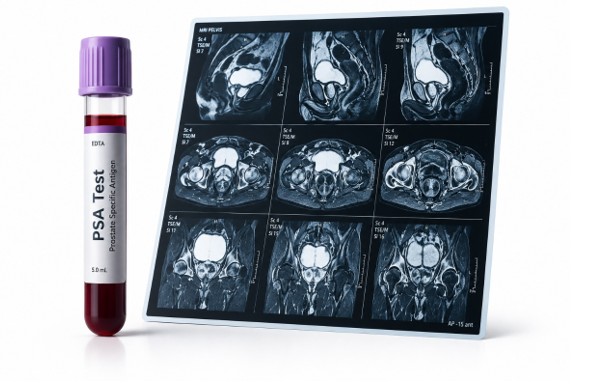
The findings don’t diminish the importance of PSA testing. Rather, they highlight the importance of evaluating the whole patient — not just a single blood test result.
According to the researchers, imaging scans may occasionally reveal cancer progression before changes appear in PSA levels. As a result, periodic imaging and routine follow-up remain important components of prostate cancer care, particularly for men with advanced disease.
The study serves as a reminder that PSA is only one part of the overall picture. For some patients, the first sign of progression may appear on a scan—not in a blood test.
Study Challenges Beliefs About Testosterone and Prostate Cancer
For decades, many men have worried that high testosterone levels might fuel prostate cancer growth. However, a new study from MD Anderson Cancer Center found that low testosterone may be associated with a greater risk of disease progression in men on active surveillance.
The study followed more than 900 men with low-risk prostate cancer who had chosen active surveillance rather than immediate treatment. Researchers found that men with low testosterone levels were significantly more likely to develop more aggressive disease during follow-up than men whose testosterone levels were in the normal range.
The findings don’t prove that low testosterone causes prostate cancer to become more aggressive, but they suggest that testosterone levels may provide doctors with additional information when monitoring men on active surveillance.
Researchers say further studies are needed, but the results challenge the long-standing assumption that higher testosterone levels necessarily lead to worse prostate cancer outcomes.
New Test May Help Personalize Prostate Cancer Treatment
The FDA has approved a new test that may help doctors better understand how an individual man’s prostate cancer is likely to behave and which treatments may be most effective.
The test looks for the presence — or absence — of a protein called PTEN in prostate cancer tissue. Researchers have found that cancers lacking PTEN often behave differently and may require a different treatment approach.
The approval represents an important step toward more personalized prostate cancer care. Rather than treating all prostate cancers the same way, doctors are increasingly using information from a patient’s tumor to help guide treatment decisions.
Experts believe this type of testing will become more common in the years ahead, particularly for men with higher-risk or more advanced disease. The goal is simple: to match each patient
with the treatment most likely to help him while avoiding treatments that may be less effective.
As researchers continue to learn more about the genetic and molecular characteristics of prostate cancer, personalized medicine is becoming an increasingly important part of cancer care.

Making Sense of Prostate Cancer
The National Comprehensive Cancer Network (NCCN) is one of the most respected cancer organizations in the world, bringing together experts from leading cancer centers to develop evidence-based guidelines used by physicians across the country. NCCN also creates patient-friendly versions designed to help individuals and families better understand cancer screening, diagnosis, and treatment decisions.
Last month, we began a special four-part series based on the latest NCCN Guidelines for Patients: Prostate Cancer Screening. Building upon those concepts, this series also explores many of the diagnostic and treatment topics men may encounter after an abnormal screening result.
Throughout this series, we’re breaking down key prostate cancer concepts into plain, understandable language. In Part 1, we reviewed PSA screening, early detection, and what an elevated PSA may — and may not — mean. In Part 2, we’ll explore what often happens after an abnormal screening result, including MRI scans, biomarker tests, prostate biopsies, Gleason Scores, Grade Groups, and how physicians assess prostate cancer risk.
Part 2: What Happens After an Abnormal PSA?
An elevated PSA level can certainly be concerning, but it doesn't automatically mean prostate cancer is present. Because PSA levels can fluctuate for a variety of reasons, physicians often consider PSA trends over time and may recommend repeating the test before proceeding with further evaluation.
Doctors also take into account factors such as age, prostate size, urinary symptoms, medications, family history, and overall health when determining whether additional testing may be appropriate.
In fact, many men with elevated PSA levels are ultimately found to have non-cancerous conditions such as benign prostatic hyperplasia (BPH), prostatitis, or other causes of prostate irritation.
Before the Biopsy
Fortunately, an elevated PSA no longer automatically leads to a biopsy. Physicians now have several additional tools — including MRI scans, biomarker tests, and risk calculators — that can help provide a clearer picture of an individual’s risk before proceeding with more invasive testing.
MRI
If PSA levels remain elevated or other factors suggest a higher risk of prostate cancer, your doctor may recommend an MRI scan before proceeding with a biopsy. MRI can provide valuable information about the prostate, including its size and whether any suspicious areas are present. In some cases, MRI findings may help a patient avoid an unnecessary biopsy.
MRI (magnetic resonance imaging) uses powerful magnets and radio waves to create images of organs and tissues inside the body. In prostate cancer evaluation, MRI allows physicians to obtain a clear view of the prostate and surrounding tissues.
One reason MRI has become such an important tool is that it can help identify areas that may harbor clinically significant prostate cancer — cancers that are more likely to grow, spread, or require treatment. If no suspicious areas are identified, some men may be able to avoid a biopsy.
The most advanced MRI technique commonly used for prostate cancer evaluation is called multiparametric MRI (mpMRI). This type of MRI combines several imaging techniques during the same exam, helping physicians better evaluate suspicious areas within the prostate. If a biopsy is recommended, mpMRI can also help physicians target specific areas of the prostate for sampling.
Like most medical tests, MRI is not perfect. It may occasionally miss a cancer or identify an area that appears suspicious, but ultimately proves to be non-cancerous. MRI findings are therefore considered alongside PSA levels, medical history, and other clinical information when determining the most appropriate next steps.
Understanding PI-RADS Scores
When interpreting a prostate MRI, radiologists often use a standardized scoring system known as PI-RADS (Prostate Imaging Reporting and Data System). PI-RADS helps estimate how suspicious an area appears for clinically significant prostate cancer.
- PI-RADS 1: Very low likelihood of clinically significant cancer
- PI-RADS 2: Low likelihood
- PI-RADS 3: Uncertain or equivocal findings
- PI-RADS 4: High likelihood of clinically significant cancer
- PI-RADS 5: Very high likelihood of clinically significant cancer
It’s important to remember that PI-RADS scores do not diagnose cancer. Rather, they help physicians determine whether a biopsy may be warranted and which areas of the prostate should receive closer attention. Only a biopsy can confirm whether cancer is actually present.
Biomarker Tests
In some situations, physicians may recommend additional laboratory tests, often called biomarker tests, to help estimate the likelihood that a clinically significant prostate cancer is present. These tests are typically performed using blood or urine samples and are designed to provide information beyond a standard PSA test.
Biomarker tests are not used to diagnose prostate cancer on their own. Rather, they serve as one additional piece of information that may help patients and physicians decide whether a prostate biopsy is warranted.
Risk Calculators
Physicians may also use risk calculators to estimate an individual’s likelihood of having prostate cancer. These tools combine information such as age, PSA level, family history, race, prostate size, and other factors to generate a personalized risk estimate.
Like biomarker tests, risk calculators don’t diagnose prostate cancer; they help patients and physicians make more informed decisions about whether additional testing or a biopsy may be appropriate.
Understanding the Biopsy
The only way to confirm a diagnosis is through a biopsy — a procedure in which small samples of prostate tissue are removed and examined under a microscope by a pathologist. Depending on the approach used, tissue samples may be obtained either through the rectum (transrectal biopsy) or through the skin between the scrotum and rectum (transperineal biopsy). Local anesthesia, sedation, or other forms of pain control may be used to improve comfort during the procedure.
In recent years, many medical centers have increasingly adopted the transperineal approach because the biopsy needle passes through the sterilized skin of the perineum rather than the rectum, thereby avoiding contact with rectal bacteria. As a result, the risk of infection is generally much lower than with traditional transrectal biopsy. The transperineal approach may also provide improved access to certain areas of the prostate, including the anterior (front) portion of the gland.
Many physicians now use MRI findings to help guide prostate biopsies. By targeting suspicious areas identified on MRI, they are more likely to detect clinically significant cancers while reducing the chance of missing important disease.
The tissue samples collected during the biopsy are then analyzed in a laboratory. If cancer is present, the pathologist will assign a Gleason Score and Grade Group, which help physicians determine how aggressive the cancer appears to be and guide treatment decisions.
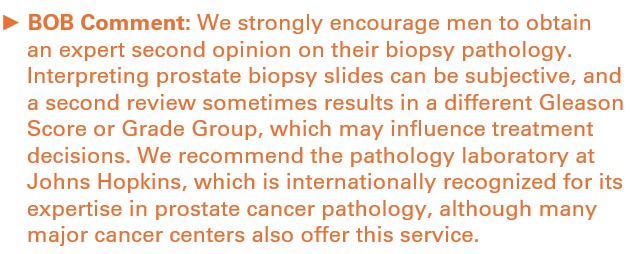
A prostate biopsy provides far more information than simply whether cancer is present. The pathology report contains important details that help physicians estimate how aggressive a cancer may be and guide treatment recommendations.
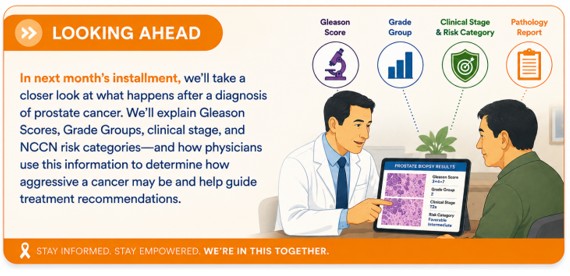
In the next installment of this series, we'll explain how to interpret Gleason Scores, Grade Groups, clinical stage, and NCCN risk categories — and how physicians use this information to assess risk and guide treatment decisions.

We’ve been publishing BOB Tales for 25 years, sharing thousands of articles—many of which our newer members haven’t seen, and longtime members may have forgotten or would appreciate revisiting. That’s why we regularly reprint articles from past issues that we believe are still relevant and carry an important message. The following is an article from our December 2013 issue.
Study Suggests Link Between Vitamin D Deficiency and Pneumonia
A report recently published in the Journal of Epidemiology and Community Health suggests that higher levels of vitamin D may be protective against pneumonia in an aging population.
The study, which looked at 723 men and 698 women between 53 and 73 years of age, was part of the larger Kuopio Ischemic Heart Disease Risk Factor Study, conducted by researchers at the University of Eastern Finland Institute of Public Health and Clinical Nutrition.
Those enrolled in the study were free of pneumonia and other pulmonary diseases at the beginning of the study and were followed for an average of 9.8 years. Blood samples were taken at enrollment and analyzed for serum 25-hydroxyvitamin D3 levels. During the study, 73 subjects were hospitalized at least one time for pneumonia.
Increasing age was associated with a greater risk of pneumonia. However, researchers also found that subjects whose serum 25-hydroxyvitamin D3 levels fell within the lower third of the group had a 2.6 times greater risk of contracting pneumonia when compared to those with the highest levels. The study also found that men were more likely to develop pneumonia than women, and smokers more than non-smokers.
This study is the first to show a relationship between low levels of vitamin D and higher risks of contracting pneumonia among aging populations. Earlier studies had shown an association between reduced vitamin D levels and increased infection risk.
In northern countries like Finland, sun exposure is greatly reduced during winter, requiring residents to supplement their diets with vitamin D. The researchers say vitamin D deficiency is a public health problem and call for additional research.

When It Comes to Aging, Strength Matters
Many people judge their health by a single number: their weight. But a growing body of research suggests that muscle strength and muscle mass may be even more important as we age.
For years, body weight and body mass index (BMI) have been widely used to assess health and disease risk. However, experts increasingly recognize that two people with the same weight can have very different body compositions. One may carry more muscle, while the other carries more body fat.

In a recent study involving more than 5,400 older adults, researchers found that individuals with greater muscle strength had a significantly lower risk of death than those with lower levels of strength. The findings add to growing evidence that strength may be an important predictor of healthy aging and longevity.
Muscle does far more than help us move. It plays a key role in maintaining balance, supporting healthy metabolism, regulating blood sugar, protecting bones, and preserving independence. Strong muscles can also help reduce the risk of falls and injuries.
Researchers have also found that people with greater muscle mass tend to live longer, suggesting that both strength and muscle quantity play important roles in healthy aging.
Building muscle generally requires some form of resistance training, such as weightlifting, resistance bands, body-weight exercises, or strength-training machines.
The good news is that it’s never too late to build muscle. Experts generally recommend regular strength-training exercises, adequate protein intake, and staying physically active throughout life. Studies have shown that even people who begin exercising in their 60s, 70s, and beyond can gain strength, increase muscle mass, and improve their ability to perform everyday activities.
While losing excess body fat may still be beneficial for many people, the message from current research is clear: when it comes to healthy aging, building and maintaining muscle may be just as important as reducing the number on the scale.
Can Fermented Foods Benefit Your Gut — and Your Brain?
Fermented foods have been consumed for thousands of years, but recently, they’ve attracted growing attention from scientists studying the gut microbiome — the trillions of bacteria and other microorganisms that live in our digestive tract.

Foods such as sauerkraut, kimchi, kefir, yogurt with live cultures, miso, and kombucha contain beneficial microbes produced during the fermentation process. Researchers are exploring whether these foods may help support digestive health, increase microbial diversity, and reduce inflammation.
In a recent Stanford University study, participants who consumed a diet rich in fermented foods experienced an increase in the variety of beneficial microbes living in their digestive systems, along with reductions in several inflammatory markers. The findings suggest that fermented foods may help support a healthier gut environment.
Some scientists have begun studying so-called “psychobiotics,” beneficial microbes that may influence mental well-being through the gut-brain connection. However, experts caution against viewing fermented foods as a miracle cure. While evidence supporting gut health benefits continues to grow, studies examining memory, cognition, and long-term brain health remain in their early stages.
If you’re interested in trying fermented foods, experts generally recommend starting slowly. Even small amounts of sauerkraut, yogurt with live cultures, or kefir may help introduce beneficial microbes into the digestive system.
Want to Age Well? Do More of What You Love
When most people think about healthy aging, they think about exercise, diet, and regular medical care. However, a growing body of research suggests that staying mentally and socially engaged may also play an important role. Studies have found that older adults who regularly participate in hobbies and leisure activities often report better physical health, greater life satisfaction, and improved emotional well-being.

Activities such as reading, painting, playing music, gardening, volunteering, and attending cultural events may provide mental stimulation, encourage social interaction, reduce stress, and promote a sense of meaning and accomplishment.
One recent study involving more than 3,500 adults found that people who regularly participated in arts and social activities showed signs of slower biological aging than those who participated less often. The benefits were particularly noticeable among adults over 40.
Importantly, researchers are not suggesting that hobbies can replace exercise or medical care. Rather, hobbies may complement other healthy lifestyle habits and contribute to overall quality of life.

Paying Forward the Gift of Life
How Rabbi Daniel Alter Turned Survival into Service
By Bob Marckini
A Letter Rediscovered
Last month I received a call from Lori Alter. While going through old files, she came across a letter I’d written more than 20 years ago about her son Daniel’s courageous battle with an aggressive brain tumor.

Her call brought me back to a special event I attended at Loma Linda University Medical Center in late 2000. I was nearing the end of my proton treatment for prostate cancer just as Loma Linda University Health was celebrating the 10th anniversary of the world’s first hospital-based proton treatment center. Patients from many walks of life shared stories about how proton therapy had changed — and in some cases saved — their lives. Among the speakers were Lori Alter and her son, Daniel.
A Devastating Diagnosis
Daniel was a young college student when I first met him at Loma Linda. A few years earlier, while studying for his Bar Mitzvah, he had been diagnosed with a rare, aggressive brain tumor called a chordoma. These tumors are especially dangerous because they grow near critical structures such as the brainstem, optic nerves, and carotid arteries, making surgery extremely difficult. Initially, doctors told his parents, “Take him home and hug him.” In other words, cherish whatever time remains.
But Daniel’s story was far from over.
After more consultations and research, the Alters found a world-class surgeon in Little Rock, AR, who developed the surgeries he would need. In the first of three surgeries, Daniel had a halo ring secured to his skull to immobilize his cervical spine, a tracheotomy, and a feeding tube, in addition to tumor removal trans-orally. The second surgery removed the tumor, and the third was for neck fusion.
“They removed most of the tumor,” Daniel recalled, “but a small percentage was effectively inoperable.”
A New Hope at Loma Linda
The Alters learned about the proton treatment program at Loma Linda University Cancer Center — at that time, the only hospital-based proton center in the world. The entire family relocated from Texas to California so Daniel could receive treatment. Doctors at Loma Linda believed they could help.
Daniel underwent 42 proton therapy treatments over several weeks. For each session, a rigid custom-made mask was placed over his head and bolted to the treatment table to keep him perfectly still. Despite the physical and emotional strain, Daniel remained remarkably determined.
After daily treatments, his father took him to the Drayson Fitness Center to exercise. Afternoons were devoted to homeschooling, including French studies and continued preparation for his Bar Mitzvah — which Daniel insisted he complete on schedule.
When asked about the challenges of treatment, Daniel smiled as he remembered the strange effects on his appetite. “Week by week, my tastes would change. One week, I ate ribs every day, the next week, something else! The only foods that tasted good the whole time were IHOP pancakes.”
Today, a lasting side effect he mentions is partial hearing loss — hardly noticeable during the inspiring hour-long Zoom conversation we recently shared.
Faith Forged Through Adversity
Daniel’s battle with cancer not only strengthened his resolve; it deepened his faith. “Ever since I was a kid, I looked up to my rabbi,” he told me. “I grew up with a strong sense of Jewish identity.”
The morning of his first surgery, a mere five days after diagnosis, Daniel and his parents waited in a small hospital room. A local rabbi came to visit. He asked Daniel whether he had any questions.
“Yes,” Daniel replied. “Is there a blessing for pain?” The rabbi laughed, saying no, but there is a prayer for healing. He then sang the Mi Shebeirach — a prayer asking God to restore both physical and spiritual strength. That moment stayed with Daniel.
Another important influence was the Greene Family Camp in Bruceville, Texas, a Union for Reform Judaism camp that fosters Jewish identity, community, and service. The experience helped solidify Daniel’s desire to become a rabbi.
A Life Dedicated to Others
Today, Rabbi Daniel Alter has spent nearly a decade serving others through faith and education. He previously served as Director of Education at Temple Beth Emeth in Ann Arbor, MI, and later became the first Rabbi-Educator at Temple Kol Emeth in Marietta, GA. He recently accepted a new position as full-time rabbi at Congregation Beth El in Bangor, ME. He also writes educational books for Torah Aura Productions, where he has written five volumes.
Beyond the pulpit, Rabbi Alter is an avid reader, traveler, board gamer, aspiring golfer, and self-described “lifelong geek.” In fact, he proudly keeps an adult-sized Darth Vader costume in his office — earning him the nickname “Darth Rabbi.”
More Than a Survivor
Speaking with Daniel was both a joy and an inspiration. Faced with overwhelming odds as a child, he emerged not only as a survivor, but as a man whose faith, compassion, and sense of purpose continue to touch countless lives.
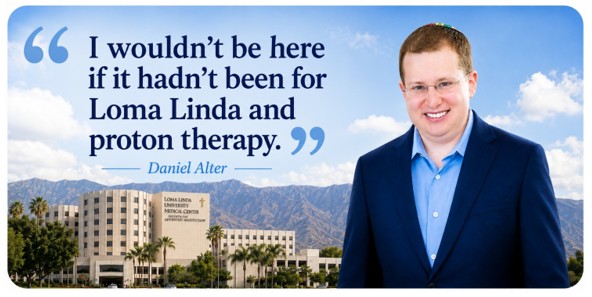
“I wouldn’t be here if it hadn’t been for Loma Linda and proton therapy.”

Many Paths to Giving Back
When people hear the phrase “giving back,” they often think of charitable donations or volunteer work. While those contributions are important, giving back can take many forms.
For Daniel Alter, it meant dedicating his life to serving others. The young man who once faced a life-threatening diagnosis went on to become a rabbi, educator, and author, helping countless people through faith, learning, and personal guidance.
His story is a reminder that difficult experiences can shape us in unexpected ways. For many people, overcoming a serious challenge inspires a desire to help others and make a difference in the lives of others.
In that sense, giving back is not always about what we give. Sometimes it is about who we become.
Giving Options
Make a gift online and choose where you'd like it to go: (· Cancer Center Vision/Stronger Together · Proton Research/James M. Slater Chair · Proton Research/Robert J. Marckini Chair · Other—specify an area or write “unrestricted” for greatest need)
Mail a check. Make it out to “LLUCC.” Specify where you’d like to direct your gift in the memo line and mail to: LLUH Office of Philanthropy · P.O. Box 2000 · Loma Linda, CA 92354
Call 909-558-5010 to make a gift or ask any questions.


A Lesson That Still Matters
In 2011, a gentleman sent an email to Bob Marckini after reading the first edition of You Can Beat Prostate Cancer. More than two decades later, his message remains just as relevant today.
Before this gentleman found the book, he’d spoken with several men who had undergone surgery for their prostate cancer. He asked how their treatment went and their initial responses were pretty reassuring.
“It wasn’t so bad,” a few of them said.
But after reading Bob’s book, he took a different approach. One of the themes Bob emphasizes throughout the book is the importance of becoming an educated patient and asking precise questions.
Following Bob’s advice, the man began to ask more specific questions:
What side effects did you experience? How long did they last? What challenges, if any, remain with you today? Looking back, would you make the same treatment choice again?
The gentleman explained in his email that these more specific questions and in-depth conversations gave him a far clearer understanding of the treatment options than general reassurances ever could.
He went on to explain that the book helped him become a more informed participant in his own care.
For Bob, that has always been the goal — not to tell readers what treatment to choose, but to help them ask better questions, gather better information, and make the treatment decision that’s right for them.
Was Bob’s book helpful to you?
If Bob’s book You Can Beat Prostate Cancer helped you make a more informed treatment decision for your prostate cancer, we’d love to hear from you.
And if you haven’t already, please consider leaving a brief review on Amazon. Your story may help another man facing prostate cancer feel a little more informed—and a little less alone.

Last Month’s Brain Teaser

Answer:
Take the first letter of each word and place it at the end. It will spell the same word backwards.
Winner:
Congratulations to Harold Peters of Blackfoot, ID, our June Brain Teaser winner — who, as it turns out, is every bit as extraordinary as he is humble.
Harold is a 2003 proton therapy graduate from Loma Linda University Cancer Center. Long before his treatment, he spent decades serving as a teacher, pastor, missionary, humanitarian, and university administrator. His remarkable journey took him through 25 years in Africa, service as Vice-Chancellor of Pacific Adventist University in Papua New Guinea, and travels to 45 countries.
After undergoing proton therapy in 2003, Harold came to believe that his recovery was shaped not only by the treatment itself, but also by the extraordinary culture of kindness he encountered at LLUCC. One memory that has stayed with him for more than 20 years was an insurance clerk who didn’t simply point him toward his next appointment, but personally walked him there. “I soon discovered that going the second and third miles to be helpful was a fundamental part of their culture,” he said.
Harold and his wife recently celebrated 69 years of marriage. He continues to preach, sing, play the piano, and enjoy outstanding health. Reflecting on his many blessings, he simply says, “God is good, and I feel so blessed.”
We’ll be sharing Harold’s extraordinary story in an upcoming issue of BOB Tales. We think you’re going to enjoy getting to know him.
New Brain Teaser
Cybersecurity Quiz: True or False?
-
A longer password is generally more secure than a shorter password with lots of symbols.
-
Using the same password for multiple websites is safe if the password is strong.
-
Your email account is one of the most important accounts to secure.
-
Security experts recommend changing all your passwords every month.
-
Password managers can generate stronger passwords than most people create on their own.
Send your answer(s) to [email protected] for a chance to win a signed copy of Bob Marckini’s second edition book, You Can Beat Prostate Cancer.

Funnies…
Getting Old
My memory is so bad…
How bad is it?
How bad is what?
My doctor told me to watch my sugar intake.
Now I eat doughnuts in front of a mirror.
The good news is I still know all the words to songs from 1975.
The bad news is I can’t remember why I walked into the kitchen.
My wife says I have only two faults.
I don’t listen, and something else.
Thinking is Optional
During a recent password audit by Microsoft and Google, it was found that someone was using the following password:
MickeyMinniePlutoHueyLouieDeweyDonaldGoofySacramento
When asked why he had such a long password, he said he was told that it had to be at least eight characters long and include at least one capital.
The New Organist
The church’s regular organist called in sick, so a substitute was brought in at the last minute. Before the service, the minister handed him a copy of the program and said, “You’ll have to improvise after I make an announcement about our finances.”
Later in the service, the minister addressed the congregation: “Brothers and sisters, the roof repairs cost twice as much as expected, and we need an additional $4,000. Would everyone who can pledge $100 please stand?”
Immediately, the substitute organist began playing “The Star-Spangled Banner.”
And that is how the substitute became the new organist.
Grandpa’s Tea Time
One day while my grandmother was out, my grandpa was in charge of me. I was about two and a half years old at the time.
Someone had recently given me a little tea set as a gift. It was one of my favorite toys.
That afternoon, Grandpa was in the living room engrossed in the evening news when I brought him a little cup of tea (which was actually water). After several cups and lots of praise for such “yummy tea,” my grandmother came home.
Smiling, my grandpa asked her to wait in the living room to watch me bring him another cup of tea because it was “just the cutest thing.”
Grandmother waited, and sure enough, in a minute I came down the hall with a cup of tea for grandpa … and she watched him drink it up.
Then she looked at Grandpa and said, “Did it ever occur to you that the only place she can reach to get water is the toilet?”

Still Remember Every Word?
Ever wonder why you can remember the words to a song you haven’t heard in 30 years, yet struggle to recall your neighbor’s first name?

Researchers say songs have several built-in memory advantages. Music combines words, rhythm, melody, repetition, and emotion, giving the brain multiple pathways for storing and retrieving information. Choruses repeat the same lyrics over and over, while rhyme and rhythm create patterns that make words easier to remember.
Emotion also plays a powerful role. Songs often become linked to important moments in our lives — a first date, a road trip, a wedding, or a favorite summer. Those emotional connections help strengthen long-term memories.
Researchers at Durham University note that familiar songs may become part of our “procedural memory,” the same type of memory involved in activities such as riding a bicycle. That’s one reason lyrics can remain surprisingly accessible even many years later.
So the next time you find yourself singing every word to a song you haven’t heard in 30 years, don’t be surprised. Your brain has been practicing that memory all along.
The Science of Handwriting
In today’s digital world, many of us spend much more time typing than writing by hand. But researchers say putting pen to paper may do more for the brain than we realize.
Handwriting engages multiple areas of the brain involved in memory, language, attention, and fine motor skills. Studies have found that people also tend to remember information better when they write it down, as the physical act of forming letters appears to help the brain process and store information more effectively.

Researchers are even exploring whether subtle changes in handwriting—such as writing speed, spacing, or letter formation—might one day help detect early cognitive changes.
So, whether you're jotting down a grocery list, writing a thank-you note, or signing a birthday card, you may also be giving your brain a valuable workout.
Did You Know…
Trees can communicate through underground networks. Scientists have discovered that many trees are connected by underground fungal networks that allow them to share nutrients, water, and even chemical signals. Researchers sometimes refer to this vast system as the “Wood Wide Web,” and studies suggest it may help forests remain healthier and more resilient.
Honey never spoils. Honey’s low moisture content and natural acidity make it extremely resistant to bacteria and spoilage. Archaeologists have even found jars of honey in ancient Egyptian tombs that were still preserved after thousands of years.
There are more trees on Earth than Stars in the Milky Way. Scientists estimate there are approximately 3 trillion trees on Earth. By comparison, astronomers estimate our galaxy contains between 100 and 400 billion stars, meaning Earth may have several times more trees than the Milky Way has stars.
The fax machine predates the American Civil War. A working fax machine was patented by Scottish inventor Alexander Bain in 1843. That's nearly two decades before the start of the American Civil War and long before the invention of modern telephones.

No Friend Left Behind
While serving at an Army base in Iraq, Army Specialist Ken Wyrsch befriended a stray puppy that wandered onto the post. The soldiers named him Ollie, and before long, the dog became a beloved part of daily life. He greeted troops as they left for missions and was always there to welcome them home.
As Ollie grew, so did the bond between dog and soldier.
Then came the day Ken had been dreading. The base was closing, and the troops would be heading home. Ollie, however, would be left behind to fend for himself on the streets.

Ken couldn’t accept that.
After returning to California, he partnered with a rescue organization and raised thousands of dollars to bring Ollie to the United States. Weeks later, the two were reunited.
The moment Ollie saw Ken again, he sprinted toward him, wrapped his paws around his waist, and buried his face in his neck. There was no doubt he remembered his friend.
Asked why he went to such lengths to save a stray dog he met halfway around the world; Ken’s answer was simple:
“You never leave a friend behind.”
Sometimes the most powerful lessons about loyalty, gratitude, and unconditional love come from our dogs.
Low PSAs to all,
Bob Marckini and Deb Hickey
Want a printable version of this issue?
👉 Download the PDF here.
NO MEDICAL ADVICE: Material appearing here represents opinions offered by non-medically trained laypersons. Comments shown here should NEVER be interpreted as specific medical advice and must be used only as background information when consulting with a qualified medical professional.