
Dear Members (a note from Deb Hickey):
Spring is here, which means two things: more daylight and the sudden realization that your windows are filthy. There’s something about that first bright, sunny day that makes everything more visible—things you didn’t notice (or maybe chose not to notice) all winter long.
It got me thinking about how much clarity matters—not just in our homes, but in how we see things more broadly. And interestingly, that same idea shows up in this month’s newsletter. A lot of the research right now isn’t about dramatic breakthroughs—it’s about seeing prostate cancer more clearly, earlier, and treating it with greater precision for better outcomes.

In our News Report section this month, we highlight several advances focused on improving how prostate cancer is detected, monitored, and managed. These include research on using PSMA PET scans earlier to help some men avoid unnecessary biopsies, a new MRI “fingerprinting” technique designed to better distinguish aggressive from lower-risk disease, and a simple blood test that may one day allow doctors to track cancer more precisely over time. We also cover a common bladder medication that may help reduce hot flashes during hormone therapy, along with ongoing research into how the diabetes drug metformin may influence metabolism in prostate cancer.
Our Flashback article features a memorable video from the archive: BOB member Charlie Mack’s proton therapy graduation speech from 2012. Delivered at one of the Loma Linda Wednesday night meetings, Charlie’s remarks are thoughtful, humorous, and full of perspective—and offer a glimpse into the sense of community that has long been part of the proton experience.
In our Member Spotlight section, we feature Bernard “Bernie” Picchi, whose thoughtful, analytical approach shaped both his career and his response to a prostate cancer diagnosis. His story is a powerful example of what can happen when patients take the time to understand their options and take an active role in their care.
In Healthy Living, we explore the important role of the lymphatic system and how simple lifestyle habits can support its function, along with practical strategies for improving sleep as we age. We also take a closer look at the benefits—and a few cautions—of walnuts as part of a healthy diet. As always, we welcome your feedback! You can reach me at [email protected]. We hope you enjoy this issue, and we thank you for being part of our community—past, present, and future.
Deb Hickey

📄 Prefer to print and read?
👉 Download the PDF here.

- Scan Could Help Some Men Avoid Prostate Biopsies
- MRI “Fingerprinting” May Improve Prostate Cancer Scans
- Blood Test May Reveal Aggressive Prostate Cancer
- Common Drug Linked to Fewer Hot Flashes During Hormone Therapy
- Diabetes Drug May Influence Metabolism in Prostate Cancer
- Flashback: A Proton Graduation Speech from the Archive
- Member Spotlight: Applying an Analyst’s Mindset to a Prostate Cancer Diagnosis
- The Lymphatic System—Quietly Powerful, Critically Important
- Sleeping Poorly? Make These Three Simple Changes
- Are Walnuts Healthy? The Pros—and a Few Cons

Scan Could Help Some Men Avoid Prostate Biopsies
A new study suggests suggests that an advanced imaging scan could significantly reduce the need for prostate biopsies—without missing dangerous cancers.
Today, the PSMA PET/CT scan is most often used after prostate cancer has already been diagnosed or when doctors are trying to determine if it has spread or returned. But researchers are now studying whether the PSMA PET/CT scan could play a role much earlier—helping decide whether a biopsy is needed at all.
In the study, using the scan after an unclear or low-risk MRI result cut the number of biopsies by about half, while still identifying men with aggressive cancers who needed further testing.
Currently, many men follow a familiar path: an elevated PSA leads to an MRI, and if results are uncertain, a biopsy is often the next step. While biopsies are routine, they’re invasive, uncomfortable, and sometimes unnecessary—especially when they detect slow-growing cancers that may never cause harm.
The PSMA PET/CT scan works by using a molecule that binds to prostate cancer cells, causing them to “light up” on imaging—particularly in more aggressive tumors. In the study, negative scans helped rule out the need for biopsy, while positive results guided more targeted testing.
This approach could help some men avoid unnecessary biopsies.

MRI “Fingerprinting” May Improve Prostate Cancer Scans
A new MRI-based technique known as MR fingerprinting (MRF) is being studied as a potential way to improve how prostate cancer lesions are identified and characterized on imaging scans.
Traditional prostate MRI relies mainly on how the images look to the radiologist, using different scan techniques that highlight differences in tissue and how they respond to contrast dye. While this approach is very effective, it can still vary on the reader and may be limited in how precisely it characterizes tissue.
MR fingerprinting takes a different approach. Instead of relying only on how tissue looks, the technique measures underlying properties of the tissue to create a unique “fingerprint” for different types of prostate tissue. These patterns can then help distinguish normal tissue from cancer and may help doctors better tell lower-risk from more aggressive disease.
Early research suggests that MR fingerprinting may improve consistency in prostate MRI interpretation and add additional detail when evaluating suspicious lesions. By providing objective, quantitative data, the technique could help reduce variability between radiologists and improve confidence in imaging-based assessments.
Blood Test May Reveal Aggressive Prostate Cancer
New research is exploring the use of a simple blood test to better understand and monitor prostate cancer over time. The approach focuses on circulating tumor cells—cancer cells that break away from a tumor and enter the bloodstream. These cells may provide clues about how aggressive a cancer is and how it is responding to treatment.

Unlike a biopsy, which requires tissue sampling, this “liquid biopsy” approach could allow doctors to monitor changes in the disease through routine blood draws over time.
Early studies in advanced prostate cancer suggest that higher levels of these circulating tumor cells are associated with more aggressive disease and poorer outcomes.
Researchers note that while the technology is still being refined and is not yet ready for routine clinical use, improvements in detection methods are bringing it closer to practical application. If validated, blood-based monitoring could eventually offer a less invasive way to track disease progression and help guide treatment decisions.
Common Drug Linked to Fewer Hot Flashes During Hormone Therapy
A drug commonly used to treat overactive bladder, oxybutynin, may also help reduce hot flashes in men receiving hormone therapy for prostate cancer, according to a new clinical trial.

The study found that men taking the medication experienced significantly fewer and less severe hot flashes compared with placebo, along with improved quality of life. Symptoms often began improving within the first week of treatment.
Hot flashes are a common side effect of hormone therapy and can significantly affect sleep and daily comfort. The treatment was generally well tolerated, with side effects consistent with those already known for oxybutynin, such as dry mouth.
Researchers say the findings could offer a simple, low-cost option to help manage one of the most bothersome side effects of treatment.
Diabetes Drug May Influence Metabolism in Prostate Cancer
Metformin is one of the most widely prescribed medications in the world, primarily used to treat type 2 diabetes by helping the body control blood sugar. It works by reducing how much glucose the liver produces and improving how the body responds to insulin.
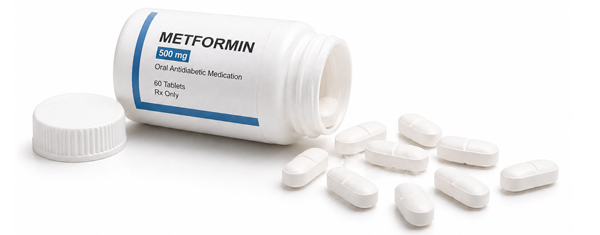
But recently, the drug has been getting attention for something more unexpected: researchers are finding that metformin may “echo” some of the biological effects of exercise.
In simple terms, that doesn’t mean the drug replaces physical activity. Instead, early studies suggest metformin may activate some of the same energy-regulating pathways in the body that are typically stimulated during exercise—particularly those related to metabolism and how cells process fuel.
It’s important to emphasize that metformin is not an approved treatment for prostate cancer. However, it’s being actively studied because metabolism and cancer biology are closely linked, and drugs that affect insulin and energy balance may have broader effects than originally understood.
For now, the takeaway is simple: metformin remains a diabetes drug, but ongoing research continues to uncover surprising ways it may interact with the body beyond blood sugar control.

We’ve been publishing BOB Tales for 25 years, sharing thousands of stories—many of which newer members haven’t seen, and longtime members may appreciate revisiting. While we often reprint written pieces from past issues, every now and then we come across something a little different that’s just too good not to share again. The following is from our April 2012 issue.

A Proton Graduation Speech from the Archive
This week’s Flashback piece is a bit unusual—and very special. It’s a video of BOB member Charlie Mack’s graduation speech from April 2012. Like many Loma Linda University Cancer Center patients did—and still do—he delivered his remarks at one of the Wednesday Night Meetings following the completion of his proton therapy treatment.
Charlie has been a member since his treatment ended nearly 15 years ago, and over time he became a friend to both Bob and Deb. They served together on the LLUCC Proton Advisory Council for many years, meeting in Loma Linda, CA once or twice a year. Through that work, Bob and Deb got to know Charlie and his wife Phyllis well. They describe them as genuine and kind-hearted and are grateful for the friendship that developed over the years.
You’ll see Charlie’s personality come through in the video. His talk is funny, heartfelt, and full of perspective. At one point, reflecting on his treatment experience, he jokes that “it shouldn’t be this easy”—a line that will resonate with many former and current proton patients. He reflects on his journey in a way that will make you laugh, but also reminds us of the community, support, and shared knowledge that helped so many patients through treatment.
In his speech, Charlie also acknowledges Bob Marckini and the impact of his book on patients navigating proton therapy, as well as Dr. Lynn Martell, who for many years led the Wednesday night meetings and supported countless patients and families at LLUCC.
We think you’ll really enjoy seeing this video for the first time, or revisiting it after many years. Thank you, Charlie.

Applying an Analyst’s Mindset to a Prostate Cancer Diagnosis
We’ve long noticed a pattern among men who choose proton therapy: They tend to be educated, thoughtful, analytical, and deliberate—people who take the time to understand their options before making life-changing decisions. When faced with a prostate cancer diagnosis, they don’t simply ask, “What should I do?” They ask deeper questions, seek multiple perspectives, and take ownership of their path forward. Bernard (“Bernie”) Picchi is a standout example.
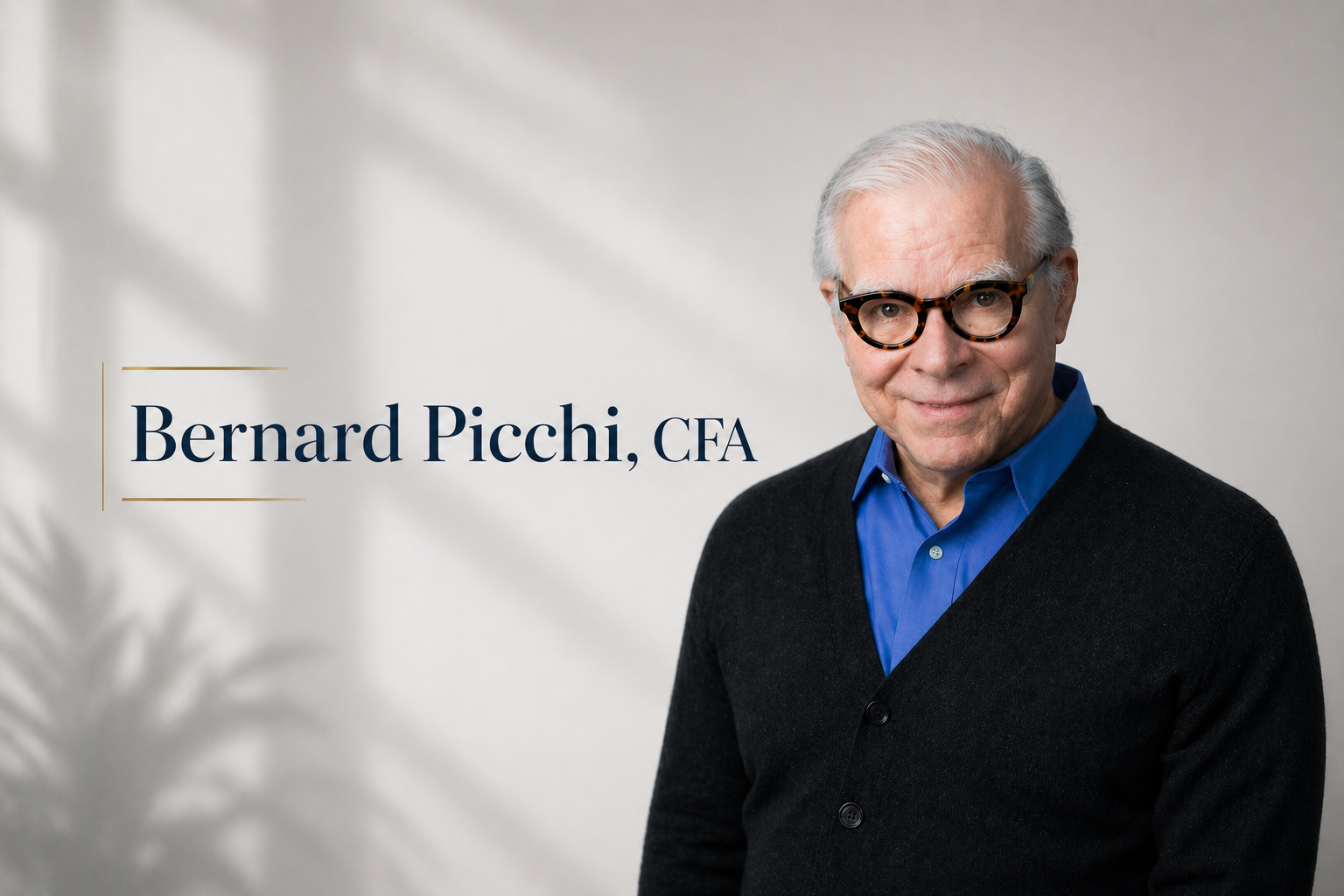
Bernie serves as Managing Director of Private Wealth Management at Palisade Capital Management in Fort Lee, New Jersey, where he advises individuals and families on their investments. In 2015, he brought that same disciplined approach to his own health, choosing proton beam therapy at Loma Linda University Cancer Center. Today, he remains cancer-free—and his journey didn’t end with treatment. Bernie has since become a friend and a generous supporter of the institution that cared for him. We spoke with him about his career, his experience with proton therapy, and his enduring connection to LLUH. What follows is an edited Q&A.
How Did You Become an Investment Manager?
By accident is the short answer. My university degree is in international affairs from the Georgetown University School of Foreign Service. Mellon Bank (Pittsburgh) hired me to join their one-year training program – an excellent “boot camp” in every aspect of finance from community banking to bank operations to credit analysis. My last stop on that program was “Trust,” which was another name for investment research. I had an affinity for the work, and fortunately the Trust Department had an opening and offered me a position.
When Was This? Was It a Good Time to be a Research Analyst?
That was the 1970s – a truly terrible time to be an equity investor! The stock market did nothing for years, and inflation ran hot: 7% per year from 1970 to 1980. Luckily for me, my boss thought I knew something about international affairs and directed me to analyze oil company stocks. What a break! The energy sector was one of the few dependable money makers for investors after the Arab Oil Embargo and the Iranian Revolution. During that time, I earned a Chartered Financial Analyst degree (CFA), a rigorous three‑year testing program covering economics, accounting, financial statement analysis, bonds, equities, derivatives, and professional ethics.
What Happened Then?
Salomon Brothers, the New York City investment banking and trading firm, offered me a position as their North American oil and gas analyst. It was a heady time: finance was deregulated, inflation fell, and the stock and bond markets boomed. Salomon eventually named me their senior energy analyst, and I became a managing director in 1988. My research was cited by publications such as Institutional Investor magazine and The Wall Street Journal. I traveled about 120 days a year and was fortunate to have supportive colleagues and family.
So How Did You End Up as an Investment Manager?
A mutual fund company in the Rust Belt asked me to be their Director of U.S. Stock Research, with the proviso that I also manage a fund. I took that fund’s assets from $500 million to more than $1 billion in three years and earned a five‑star Morningstar rating.
Okay, but How Did You End Up Managing Individual Accounts?
After completing my contract, my wife and I wanted to return to the New York City area to be closer to family. An acquaintance at Palisade Capital asked me to help build their Wealth Management division. Building a book of business from scratch was a new challenge—and one I loved. I have now been at Palisade for 16 years, my longest career stint, working closely with clients and their families in a deeply personal way.
So, What’s Your Loma Linda Connection?
Between 2013 and 2015, my PSA rose sharply and a biopsy confirmed prostate cancer. Surgery was recommended, but while researching options I discovered Bob Marckini’s book You Can Beat Prostate Cancer and You Don’t Need Surgery to Do It. That introduced me to proton beam radiation therapy and ultimately to Loma Linda University Health. Bob was generous with his time and counsel, and in 2015 my wife and I relocated to Loma Linda for treatment. The outcome was an unqualified success—near‑zero PSA and no adverse side effects.
My wife Nancy and I strongly support LLUH. I was also born with a severe form of spina bifida and have lived a full and active life—something I never take for granted. The compassion and skill of the physicians and staff at LLUH—especially those caring for spina bifida and proton patients—has been extraordinary.
Looking back, choosing proton therapy was consistent with how I’ve tried to approach both investing and life: do the work, understand the options, and make decisions you can stand behind. We are proud supporters of proton beam therapy, cancer research, and the broader mission of LLUH—not only because of the outcome, but because of the care, integrity, and purpose we experienced along the way.

The Lymphatic System—Quietly Powerful, Critically Important
You probably know you have a lymphatic system, but do you know what it does? Think of it as your body’s hidden cleanup crew and immune defender. It’s made up of a network of vessels and nodes that flush out bacteria, viruses, toxins, and abnormal cells—the kind that, if left unchecked, could contribute to cancer. Key lymphatic organs, like the bone marrow and thymus, help produce and train the immune cells that do this important work.
How does it work?
The lymphatic system transports a clear fluid called lymph, which carries waste, bacteria, viruses, and abnormal cells. Along the way, lymph passes through small bean-shaped checkpoints called lymph nodes. These nodes are packed with immune cells that inspect the fluid and destroy harmful invaders. Eventually, lymph drains into the bloodstream and passes through the kidneys, where waste is filtered out and passed in your urine.
How can it work better?
Exercise isn’t just good for your heart—it’s essential for your lymphatic system, too. Because the lymphatic system has no pump, it relies on muscle movement and deep breathing to circulate lymph fluid.
Low-impact cardio, stretching, and exercises that combine movement with deep breathing help keep lymph flowing. Think shoulder rolls, ankle pumps, seated marching, walking, swimming, cycling, yoga, or Tai Chi. Deep belly breaths are especially effective, as they help push fluid through the largest lymphatic pathways. Even some forms of meditation that include deep breathing can help keep lymph moving.
It’s also important to maintain a healthy weight. Excess body fat can strain the lymphatic system and increase the risk of lymphedema, while being overweight is linked to inflammation, hormonal imbalances, and higher risk for multiple cancers.
Support your lymphatic health by staying active and eating well: fill most of your plate with vegetables, fruits, whole grains, nuts, and seeds, choose lean proteins, and limit red and processed meats. Aim for at least 150 minutes of moderate exercise or 75 minutes of vigorous activity each week.
Sleeping Poorly? Make These Three Simple Changes
If restful sleep feels harder to come by—a common change with aging—you’re not alone. Aging naturally shifts sleep patterns, and many older adults experience lighter sleep, more frequent awakenings, and less deep, restorative rest. The good news is that a few simple changes can make a meaningful difference.

1. Keep your sleep schedule tight.
Your body thrives on rhythm. Going to bed and waking up at the same time every day—even on weekends—helps regulate your internal clock. Irregular sleep timing is one of the biggest drivers of poor “sleep efficiency” (the percentage of time in bed you’re actually asleep).
Try this: Pick a realistic bedtime and stick to it for two weeks before judging results.
2. Move more during the day.
Physical activity improves both sleep depth and duration. Even moderate daily movement—brisk walking, light strength training, or yard work—can help you fall asleep faster and reduce nighttime awakenings. For men over 65, strength training is especially important, as preserving muscle supports metabolism, balance, and overall sleep quality.
Try this: Add a 20–30-minute walk or light resistance session earlier in the day (not right before bed).
3. Be Strategic About Evening Habits
Two common culprits behind disrupted sleep—especially with age—are late-day caffeine or alcohol, and drinking too much fluid before bed. Both caffeine and alcohol can fragment sleep; while alcohol may make you feel sleepy at first, it actually reduces deep sleep and increases early awakenings. Drinking fluids too close to bedtime can also lead to nighttime bathroom trips that interrupt rest.
Try this: Cut off caffeine by early afternoon, limit or avoid alcohol in the evening, and reduce fluids two to three hours before bedtime.
Sleep isn’t just about feeling rested the next day—it’s essential for memory and cognitive health, heart health, blood sugar regulation, mood, energy, and fall prevention. Poor sleep has also been linked to a higher risk of dementia and cardiovascular disease, making it a key pillar of healthy aging. While sleep naturally changes with age, it doesn’t have to deteriorate. Consistency, daily movement, and smarter evening habits can significantly improve sleep quality—often within weeks. Small shifts, big returns.
Are Walnuts Healthy? The Pros—and a Few Cons
Walnuts are a staple in everything from salads to baked goods—thanks to their rich flavor, satisfying crunch, and impressive nutritional profile. They provide a range of key nutrients, including calcium, magnesium, potassium, vitamin E, and zinc, along with a rare plant-based omega-3 fat called ALA (alpha-linolenic acid). Higher ALA intake has been linked to improved heart health and a lower risk of heart disease and type 2 diabetes—important concerns for men over 50. Walnuts also deliver four grams of protein and two grams of fiber per ounce, supporting muscle maintenance, gut health, and appetite control.

But despite these advantages, walnuts aren’t a “more is always better” food. They’re calorie-dense—one cup of shelled walnuts contains nearly 800 calories—so portions can add up quickly if you’re not paying attention. They’re also high in oxalates, which may contribute to calcium oxalate kidney stones in susceptible individuals. Those with a history of kidney stones may want to limit or avoid them.
For everyday snacking, dietitians recommend choosing raw or dry-roasted walnuts to avoid added oils and unnecessary ingredients often found in flavored varieties.
When eaten in moderation, walnuts can support heart, brain, and gut health. Research suggests they may help lower LDL (“bad”) cholesterol, reduce inflammation, and support cognitive function over time.
Bottom line: Walnuts are a nutritious, heart-smart snack—just keep portions in check, especially if you’re watching calories or have a history of kidney stones.

From Crisis to Recovery: Advanced Care at LLUH
Not all life-changing care at Loma Linda University Health involves cancer treatment. In one recent case, a U.S. Army veteran, Jorge R., arrived at LLUH in end-stage heart failure. His condition had become so severe that his heart was no longer able to pump enough blood to sustain his body. He was critically ill, and time was running short.
At that point, standard treatment options were no longer enough. Jorge’s care team moved quickly, bringing together specialists in advanced heart failure and cardiac surgery to attempt a complex, highly specialized intervention. Jorge was placed on mechanical circulatory support—technology designed to temporarily assist or take over the work of the failing heart—while surgeons worked to stabilize his condition.
It was the kind of situation where every decision mattered.
Over time, something remarkable happened. Instead of continuing to decline, Jorge’s condition began to stabilize. Slowly, his body responded to the intervention and supportive care. The same patient who had arrived in crisis—facing the very real possibility that he might not survive—began to recover strength.
Eventually, Jorge reached a point where he was able to leave the hospital and return to life outside its walls. For someone who had arrived at LLUH in critical condition, it was a transformation that once seemed very unlikely.
Stories like this are a reminder of what takes place every day across LLUH: patients arriving in their most fragile moments and leaving with renewed hope because of advanced, coordinated care and teams willing to take on the most complex cases.
For many of our members, LLUH is best known for pioneering proton therapy for prostate cancer. But experiences like this reflect something broader—the same institutional commitment that made proton therapy possible continues across the entire health system, from cancer care to advanced cardiac treatment and beyond.
It’s also a reminder that the mission many of us supported from the beginning continues today in many forms, reaching patients whose lives depend on it.

Continuing the Legacy
- Make a gift online and choose where you'd like it to go: (· Cancer Center Vision/Stronger Together · Proton Research/James M. Slater Chair · Proton Research/Robert J. Marckini Chair · Other—specify an area or write “unrestricted” for greatest need)
- Mail a check. Make it out to “LLUCC.” Specify where you’d like to direct your gift in the memo line and mail to: LLUH Office of Philanthropy · P.O. Box 2000 · Loma Linda, CA 92354
- Call 909-558-5010 to make a gift or ask any questions.

You Can Beat Prostate Cancer: And You Don't Need Surgery to Do It - Second Edition
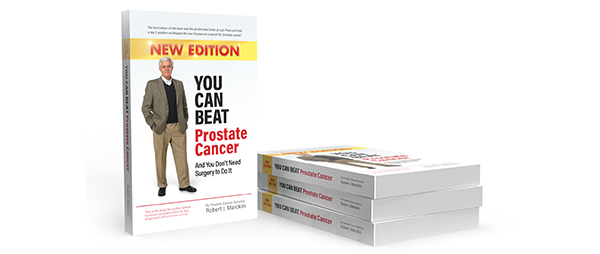
As of this writing, Bob’s second edition is still holding the No. 2 spot on Amazon—out of more than 7,000 books—on a search for “prostate cancer.” The book has 348 reviews and an average rating of five stars.
Beyond the Amazon stats, what truly matters is the feedback we hear from readers. Every day, men share how Bob’s book gave them the confidence to make one of life’s most important decisions. Some call it a “lifesaver,” others say it was the one resource that made proton therapy the clear choice. Hearing their stories reminds us why Bob wrote it in the first place.
Real Words from Real Readers
Below is an excerpt from an Amazon review written by a former patient who underwent a prostatectomy, conventional photon radiation, and experienced two recurrences before finding his way to proton therapy!

Get educated before surgery or other treatments.
After dealing with prostate cancer on and off for 25 years (prostatectomy in 2000 at age 49, recurrence in 2008 at age 57 and treated with conventional photon radiation, and another recurrence in early 2025 at age 74), I read You Can Beat Prostate Cancer and decided to pursue proton radiation. I found a proton treatment center within 100 miles of my home and went for 39 treatments. With little to no side effects, my PSA dropped from 5.1 to <0.1. I wish I’d known about proton radiation years ago as it probably would have changed my life. This book is a must read if you or someone you know gets diagnosed with prostate cancer.
Did Bob’s book help you?
When diagnosed with cancer, 89% turn to the internet for answers—40% on the very same day. Many end up on Amazon, where reviews carry serious weight. If Bob’s book helped you, please take a moment to write a review. Your words could help someone else find clarity and hope. Thank you.

Last Month’s Brain Teaser
What does 10 equal?
7 = 0
8 = 2
9 = 1
10 = ?

10 = 1. The answers represent the number of enclosed loops in each digit of the number on the left.

Congratulations to our April Brain Teaser winner from Cedar Falls, IA! This member wishes to remain anonymous, but shared the following message:
I really enjoy the BOB newsletter and the brain teasers—this one was a good one! I’m always impressed at how many of them are simpler than I first think, so I figured this had to be something a little silly.
I continue to feel very grateful for my proton experience at Mayo Clinic in Rochester. I always felt I was in very capable hands, and I appreciated the care, precision, and support I received throughout the process. Looking back, I feel fortunate to have had access to this type of treatment, and I remain thankful for the outcome and my continued good health.
New Brain Teaser
A teacher decides to plan a fun logic game with her class. She selects three students to stand in a row facing the front of the class. The student at the back (C) can see both students in front, the student in the middle (B) can see only the student in front and the student in front (A) cannot see the other two students.
The teacher shows the students three white baseball caps and two black baseball caps and puts them in a bag. The teacher then blindfolds each student and asks them to select a cap and put it on their heads.
The teacher then removes their blindfolds and asks the students to solve by logic what color caps they are wearing (They can’t see the color of their own caps.)
The student in front (A) just laughs, because what chance does he have? They stand like this for a few minutes and none of the students can guess the color of their caps. Then the student in the front (A) shouts that he knows what color cap he is wearing.
How is this possible?
Send your answer to [email protected] for a chance to win a signed copy of Bob Marckini’s second edition book, You Can Beat Prostate Cancer.

Funnies…
The Talking Dog
A guy sees a sign in front of a house: “Talking Dog for Sale.” He rings the bell, and the owner tells him, “The dog’s in the backyard.”
The guy goes back and asks the dog, “So… you talk?”
“Of course,” the dog replies.
“Wow,” the guy says. “What’s your story?”
The dog says, “I discovered I could talk when I was young. I told the CIA, and they had me traveling all over the world, sitting in rooms with spies and world leaders—no one ever suspected a dog. I helped uncover top secrets for years.”
The guy is stunned. “That’s incredible!”
The dog continues, “After that, I worked in airports doing security work, then I retired. Now I just relax here.”

The guy goes back inside and asks the owner, “Why on earth are you selling a dog like that?”
The owner shrugs. “Because he’s a liar. He didn’t do any of that.”
Bad Puns
- I tried to catch some fog. I mist.
- When chemists die, they barium.
- I know a guy who is addicted to brake fluid. He says he can stop at any time.
- I stayed up all night to see where the sun went. Then it dawned on me.
- This girl said she recognized me from the vegetarian club, but I’d never met herbivore.
- I’m reading a book about anti-gravity. I can’t put it down.
- The old man didn’t like his beard at first. Then it grew on him.
- I wondered why the baseball was getting bigger. Then it hit me!
- England has no kidney bank, but it does have a Liverpool.
- I got a job at a bakery because I kneaded dough.
- I used to think I was indecisive, but now I’m not so sure.
- All the toilets in New York’s police stations have been stolen. Police have nothing to go on.
Grocery Shopping Husband
A wife asks her husband, “Could you please go shopping for me and buy one carton of milk and if they have avocados, get six.”
A short time later the husband comes back with six cartons of milk.
The wife asks him, “Why did you buy six cartons of milk?”
He replied, “They had avocados.”
If you’re a woman, I’m sure you’re going back to read it again!
Men will get it the first time.

Billions Gone: How Americans Are Getting Scammed
Americans lost a staggering $12.5 billion to scams in the most recent full year of data (2024)—and many of the victims are ordinary people, not just the elderly or vulnerable.

So, what’s going on? Today’s scams are sophisticated, convincing, and often indistinguishable from the real thing. Criminals are pretending to be banks, the IRS, Social Security, Amazon, even your own family members. They call, text, or email with messages that sound urgent—something is wrong with your account, a payment didn’t go through, or a loved one needs help. The goal is simple: get you to act quickly before you have time to think or double-check.
The Latest Scams You Need to Know About
- Investment scams – promises of high returns (often involving crypto)
- Impersonation scams – someone posing as a government agency or company
- “Emergency” scams – a caller claims to be a grandchild or relative in trouble
- Payment tricks – asking for money via gift cards, wire transfers, or apps
One important shift: it’s not just that scams are increasing, it’s that more people are sending money when contacted, which is why total losses are skyrocketing.
A good rule to remember is this: If you feel rushed, pressured, or scared into making a decision, pause. Hang up and contact the company or person directly using a number you trust. Because today, scams aren’t obvious—they’re designed to feel completely real.
Flying in the ‘80s: 5 Things That Wouldn’t Fly Today
There was a time when you could casually stroll straight up to the gate while smoking a cigarette. You didn’t even have to remove your shoes for screening, which was usually just a quick walk through a metal detector. Airports were far less regulated, security was minimal, and travelers enjoyed a freedom that modern air travel has long erased.
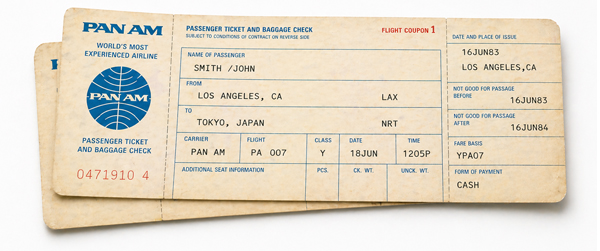
Here’s a quick peek at some of the freedoms air travelers once enjoyed—some of them might make you jealous!
- You could show up at the airport 20 minutes before your flight. Security was minimal—usually just a quick walk through a metal detector. No long lines, no removing shoes, and no arriving two hours early “just in case.”
- Friends and family could escort you all the way to the gate. People didn’t say goodbye at security. They walked you right to the plane and waved as you boarded—something that feels almost surreal today.
- Carry-on rules were basically nonexistent. Knives, scissors, large bottles of liquids, and even alcohol were commonly allowed onboard. Restrictions didn’t tighten until the early 2000s.
- Smoking was allowed on planes. There were “smoking sections,” but of course the smoke didn’t stay in one place. It took years before airlines finally banned it completely.
- Kids could visit the cockpit during a flight. Pilots often invited children in to see the controls—a fun memory for many people who flew back then, but something that’s now extremely restricted.
Did You Know…
- Ants don’t have lungs; they breathe through spiracles—nine or ten tiny openings, depending on the species.
- Wind turbines kill between 10,000 and 100,000 birds each year in the UK. Interestingly, painting one of the blades of a wind turbine black can reduce bird deaths by 70%.
- Snails have teeth—between 1,000 and 12,000, to be precise. They aren’t like ours, though. Instead, they’re microscopic structures that line a ribbon-like tongue called a radula, which works more like a file than a jaw, scraping food as the snail eats.
- Finland is the happiest country on Earth. Year after year, global rankings place it at number one, driven by factors like community trust, access to nature, and a lifestyle that prioritizes balance and well-being.
- Polar bears aren’t white. Surprisingly, underneath all their white fur, polar bears actually have jet-black skin.

The View from Our Window
A young couple moved into a new house. The next morning, while they were eating breakfast, the young woman noticed her neighbor hanging laundry outside.
“That laundry isn’t very clean,” she said. “She doesn’t seem to know how to wash properly.”

Her husband watched quietly.
Each time the neighbor hung her clothes out to dry, the young woman would comment again. “There are those dirty clothes. She really needs better detergent.”
About a month later, the young woman looked out the window and was surprised to see the laundry looking bright and clean.
“Look!” she said to her husband. “She finally learned how to wash correctly. I wonder who taught her.”
Her husband replied, “I got up early this morning and cleaned our windows.”
And so it is with life. What we see in others often depends on the clarity of the lens through which we look. Before judging, it’s worth asking whether the view needs adjusting.
Judging a person does not define who they are. It defines who you are.
Low PSAs to all,
Bob Marckini and Deb Hickey
Want a printable version of this issue?
👉 Download the PDF here.
NO MEDICAL ADVICE: Material appearing here represents opinions offered by non-medically trained laypersons. Comments shown here should NEVER be interpreted as specific medical advice and must be used only as background information when consulting with a qualified medical professional.