
Dear Members (a note from Deb Hickey):
It’s 14°F, and my goldendoodle just got stuck in the backyard. My daughter threw a tennis ball out the door and Lucy (the dog) leapt after it. She flung herself right into 20 inches of snow. Of course, not realizing what snow actually is, she immediately sank. I sent Gemma (my daughter) out in her pajamas to rescue her. Now I shall spend the rest of the morning whisking snow balls out of Lucy’s fur.
But please allow me to redirect your attention to my husband. He’s been shoveling for two hours. I can see him outside, carefully carving a narrow, purposeful trench from the back door to the garage. I am deeply grateful there are still a few universally understood “man jobs.” Call me old-fashioned if you must—but I am absolutely not going outside.
It snowed a lot last night here in Massachusetts—more than I had anticipated. The significant snowstorm—officially reported as “Winter Storm Fern”—brought heavy snow and dangerous winter conditions across New England and much of the eastern U.S.
Watching Mark work and Lucy flail, I couldn’t help but think how a single, unexpected event can disrupt everything—yet with patience and the right tools, we get through it.
If you think about it, you can apply the same logic to prostate cancer care. Recent headlines—from long-term PSA data to new urine tests, AI-enhanced imaging, and safer biopsy methods—all point to the same truth: preparation and early detection matter. Just as you gas up the generator, stock the mudroom with shovels and bags of salt, and keep an eye on the forecast, knowing your risk, understanding what may lie ahead, and having the right tools available can help you respond calmly and effectively rather than scrambling in panic.
In this issue of BOB Tales, we highlight innovations and strategies helping men navigate prostate cancer with greater clarity and confidence. As with a winter storm, outcomes are better when you have a plan, reliable support, and the knowledge to act deliberately rather than reactively.

In our News section, we break down what 23 years of PSA screening data really tell us about who benefits most from testing, explore a promising new urine test that may detect prostate cancer even when PSA is normal, examine how next-generation AI could improve MRI-based diagnosis, and review evidence suggesting certain diabetes drugs may help hormone therapy work longer. We also highlight safer biopsy techniques that may no longer require antibiotics, and share expert guidance on how older men can pursue effective cancer treatment based on overall health, resilience, and personal goals—not age alone.
Our Flashback article revisits a clear and important warning from Dr. Charles “Snuffy” Myers: why the popular supplement DHEA may actually fuel prostate cancer growth, and why survivors should be cautious of hormone-altering products marketed as “anti-aging.”
In Healthy Living, we cover new U.S. dietary guidelines that matter for older men, why bone health deserves more attention, how rest and recovery are essential for brain performance, what’s driving rising throat cancer rates in men over 50, and reassuring new research on air quality in airplanes and hospitals.
As always, we welcome your feedback! You can reach me at [email protected]. We hope you enjoy this issue, and we thank you for being part of our community—past, present, and future.
Deb Hickey

📄 Prefer to print and read?
👉 Download the PDF here.

- What We’ve Learned from 23 Years of PSA Screening
- New Urine Test May Catch Prostate Cancer Even with Normal PSA
- Next-Gen AI Could Make Prostate Cancer Diagnosis More Accurate
- Diabetes Drugs May Help Keep Hormone Therapy Effective
- The Rise of Biomarker-Driven Prostate Cancer Care
- Transperineal Prostate Biopsy: No Antibiotics Needed
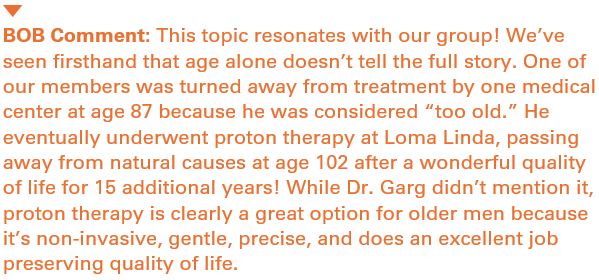
- Navigating Cancer Treatment in Older Men
- Flashback: Do Not Take DHEA
- New U.S. Dietary Guidelines, Real Benefits for Older Men
- Strong Bones, Strong Life: Why Men Should Pay Attention
- Train Your Brain Like Your Muscles
- Throat Cancer Rising in Men Over 50
- Airplane Air Isn’t That Germy

What We've Learned from 23 Years of PSA Screening
A 23-year follow-up from the European Randomized Study of Screening for Prostate Cancer (ERSPC) confirms that long-term, structured PSA testing reduces prostate cancer deaths—reinforcing the life-saving value of screening.
The study also highlights the trade-offs. While PSA testing detects more cancers early, it can lead to additional biopsies and diagnoses of low-risk disease. This underscores the importance of risk-based, patient-centered screening using tools like baseline PSA, MRI, and validated risk calculators.
One key insight: very low PSA levels at baseline or at age 60 strongly predict long-term low risk, suggesting that some men might safely extend the interval between screenings. This approach can help preserve the benefits of PSA testing while reducing unnecessary biopsies and overtreatment.
Overall, the ERSPC’s long-term data support a more personalized PSA strategy—balancing early detection with quality-of-life considerations—and provide a valuable roadmap for men, their families, and physicians in making prostate health decisions.

New Urine Test May Catch Prostate Cancer Even with Normal PSA
The PSA blood test, which revolutionized prostate cancer screening nearly 40 years ago, has been the primary method studied in large trials such as ERSPC, now with more than three decades of follow-up data—yet it’s far from perfect. It can miss some cancers and occasionally lead to unnecessary biopsies when PSA is elevated for other reasons. Biopsies, while important, can be uncomfortable and carry risks like bleeding or infection.
A new urine test, developed by researchers at Johns Hopkins, measures specific genetic molecules that prostate cancer cells release into urine. Early testing showed it detected cancer in most men who had cancer, while avoiding false positives in men who didn’t. Specifically, the test:
- Identified about 9 out of 10 men with prostate cancer
- Ruled out cancer in about 8 out of 10 men without it
- Worked even when PSA levels were in normal range
- Showed cancer specificity—molecule levels dropped sharply after the prostate was removed. This demonstrates that the test tracks molecules coming directly from the cancer itself, rather than general prostate changes or inflammation, which can confuse other tests.
What’s Next
Before this urine test can be offered in doctors’ offices, researchers need to do more, including:
- Testing it in larger groups: The early study was small. Researchers need to make sure the results hold up in a wider, more diverse population.
- Creating a standardized lab version: Right now, the test is done in research labs under controlled conditions. To use it clinically, labs need a consistent, reliable method that gives the same results every time.
- Studying how it works with PSA and other tests: Researchers want to know the best way to combine it with existing screening tools to improve early detection and reduce unnecessary biopsies.
Researchers are optimistic: once these steps are completed, combining this urine test with PSA and other markers could make prostate cancer screening more accurate and less stressful for patients in the future.
Next-Gen AI Could Make Prostate Cancer Diagnosis More Accurate
Prostate cancer detection may get a boost from a new collaboration between three companies: Alpenglow Biosciences, Virdx, and NVIDIA. Together, they are developing a system designed to improve the accuracy of MRI-based prostate cancer diagnosis.
Here’s how each company contributes:
- Alpenglow Biosciences creates detailed 3D scans of actual prostate tissue, capturing every cell and structure—details that standard biopsies or 2D imaging can miss.
- Virdx uses AI to analyze MRI scans, training its models against Alpenglow’s 3D images so the system learns what real cancer looks like.
- NVIDIA supplies the high-performance computing power needed to process and analyze the data efficiently.
With this technology, doctors could soon view MRI scans enhanced with AI-generated overlays that highlight areas most likely to contain cancer. This approach could help detect prostate cancer earlier while reducing unnecessary biopsies.
Diabetes Drugs May Help Keep Hormone Therapy Effective
A new study suggests that certain diabetes medications, called SGLT2 inhibitors, could improve outcomes for men with prostate cancer receiving hormone therapy.
Researchers in Hong Kong analyzed health records of over 14,000 men on androgen deprivation therapy (ADT), the standard hormone treatment for prostate cancer. They found that men taking SGLT2 inhibitor diabetes medications had a 37% lower risk of ADT stopping to work and a 56% lower risk of failure for next-generation hormonal agents, the newer drugs used when ADT isn’t enough. In other words, also taking SGLT2 inhibitors appeared to help hormone treatments stay effective longer.
It’s too early to say for sure whether the drugs actually help men live longer. In comparison, men taking metformin, another common diabetes drug, did not show slower cancer progression but did have a small improvement in overall survival.
The authors stress that prospective clinical trials are needed to confirm these findings and determine whether SGLT2 inhibitors could become part of standard prostate cancer care.
The Rise of Biomarker-Driven Prostate Cancer Care
Dr. Jason Hafron, Chief Medical Officer at the Michigan Institute of Urology, recently explained how “biomarker-driven” care is reshaping treatment for advanced prostate cancer. In simple terms, biomarkers are clues in a patient’s genes or in the tumor itself that help doctors predict which treatments are most likely to work.
Dr. Hafron noted that nearly 40% of new drug approvals for advanced prostate cancer are now based on biomarker-focused studies, underscoring how precision medicine is already influencing real-world care. Looking ahead, the international PROTEUS trial is examining whether these biological clues can help guide how aggressive treatment should be—results that could shape future guidelines.
Understanding biomarkers is becoming important not only for patients, but also for family members who may share inherited risk—marking a shift toward truly personalized, biology-driven care.
Transperineal Prostate Biopsy: No Antibiotics Needed
Transperineal (TP) prostate biopsy has long been recognized as safer than the traditional transrectal approach, a topic we first highlighted in our Nov. 2019 BOB Tales. Back then, we explained how TP dramatically reduces infection risk. Now, the procedure is taking safety even further: emerging evidence shows TP biopsies can be done without routine antibiotics, cutting unnecessary drug use while keeping infection rates extremely low.
Recent studies back this up. In the PREVENT randomized trial, 658 men underwent TP biopsy with no antibiotics—and not a single infection occurred—compared to a small but notable infection rate in men receiving traditional transrectal biopsies with antibiotics. Another 2025 observational study of nearly 2,000 TP biopsies without antibiotics reported infections in only 0.9% of patients, with just 0.2% requiring hospitalization. A recent meta-analysis also confirmed no difference in urinary tract infections or sepsis between TP biopsies with or without antibiotics.
The 2025 EAU-Urological Infection Guidelines now note that “there is a growing body of evidence to suggest that antibiotic prophylaxis may not be routinely required for transperineal biopsy.”
This marks an important step forward in prostate cancer diagnostics. Fewer antibiotics mean fewer side effects, lower risk of antibiotic resistance, and an even safer biopsy experience. TP biopsy—especially with tools like PrecisionPoint™ by Perineologic—continues to set the standard for safe, effective, and streamlined prostate cancer care.
Navigating Cancer Treatment in Older Men
Dr. Tullika Garg, a urologic oncologist and expert in geriatric oncology, recently spoke about the growing importance of treating older adults with cancer as individuals—not statistics. Her message is clear: chronological age should never be the deciding factor in whether someone receives cancer treatment.
In the interview, Dr. Garg explained that many older patients are in excellent physical and mental health and can safely undergo curative treatment. Instead of relying on age cutoffs, physicians should evaluate a patient’s overall fitness, resilience, and personal goals. Tools like frailty assessments and “resilience” scores help determine how well someone might tolerate surgery, radiation, or hormone therapy.
She also emphasized the importance of shared decision-making—understanding what matters most to the patient and matching care plans accordingly. With the right approach, even men in their 80s and 90s can pursue active treatment and enjoy many more healthy years.

We’ve been publishing BOB Tales for 25 years, sharing thousands of articles—many of which our newer members haven’t seen, and longtime members may have forgotten or would appreciate revisiting. That’s why we regularly reprint articles from past issues that we believe are still relevant and carry an important message. The following is an article from our March 2013 issue.
Do Not Take DHEA
Reporting from the annual ASCO (American Society of Clinical Oncology) meeting in Wyoming, Dr. Charles “Snuffy” Myers posted a video warning that taking DHEA could very likely fuel the growth of prostate cancer.
There are lots of false marketing claims on the Internet reporting that DHEA can “restore your youth,” or “raise testosterone levels and sex drive.”
According to Dr. Myers, information presented at this year’s ASCO conference shows that DHEA converts to dihydrotestosterone which has been known to fuel the growth of cancer.
So, beware of DHEA marketing claims and avoid this supplement, as it may contribute to prostate cancer growth.


New U.S. Dietary Guidelines, Real Benefits for Older Men
The federal government has released the 2025–2030 Dietary Guidelines for Americans, reflecting one of the most significant updates in nutrition advice in years. The recommendations emphasize whole, minimally processed foods, including colorful vegetables and fruits, lean proteins, whole grains, and healthy fats. They also advise cutting back on highly processed foods and added sugars, major contributors to heart disease, diabetes, and other chronic conditions common in older men.

Protein gets a special spotlight now, because it’s crucial for maintaining muscle and metabolic health as we age. The guidelines also emphasize staying hydrated and paying attention to portion sizes, tailored to your age, activity level, and overall health goals.
For men who want to stay strong and healthy, the message is simple: choose real, nutrient‑dense foods over packaged snacks and sugary drinks. Even small changes can make a big difference, helping to lower the risk of chronic disease and boost quality of life as you age.

Strong Bones, Strong Life: Why Men Should Pay Attention
Osteoporosis affects millions of older adults and is a major cause of fractures, disability, and loss of independence. Although it’s often thought of as a “women’s disease,” men account for a significant share of osteoporotic fractures and face higher rates of complications and death after injury. About one in four men over 50 will experience a fracture related to bone weakness, yet men are far less likely to be screened or treated. This gap persists because osteoporosis in men is often overlooked and fractures are treated as isolated injuries rather than signs of an underlying condition.
Bone loss in men is usually silent. Risk factors include aging, diabetes, low testosterone, prostate cancer hormone therapy, long-term steroid use, smoking, and physical inactivity. While men don’t have the rapid bone loss seen in postmenopausal women, they still lose substantial bone over their lifetime, making prevention a major goal.
Effective treatments are available. Many medications used in women, including bisphosphonates, denosumab, and anabolic therapies, are also effective for men. Weight-bearing exercise, adequate calcium and vitamin D, and healthy lifestyle choices are key to maintaining bone strength.
Awareness is critical. Men should talk with their healthcare providers about screening, risk factors, and treatment options before a fracture occurs. Addressing bone health early can prevent serious complications later.

Train Your Brain Like Your Muscles
Just like your muscles, your brain gets stronger when challenged, but only if you give it the right rest. Mental overuse can cause neural fatigue. It can slow your focus, increase mistakes, and even trigger cravings for quick rewards. The good news is that breaks and sleep aren’t interruptions—they’re an essential part of the training process.

During sleep, your brain clears waste, restores fuel, and consolidates memories, preparing you for the next day’s challenges. Combine novelty—like learning a new language or taking a different walking route—with exercise and proper rest, and you give your brain the same “train, recover, adapt” cycle that strengthens muscles. Small, consistent habits like these can help keep your mind sharp, creative, and resilient—no expensive programs required.

Throat Cancer Rising in Men Over 50
Rates of throat cancer have been changing in recent decades. While cases linked to smoking and heavy alcohol use declined for years, a different form of the disease has been steadily increasing—particularly among men over 50. Researchers attribute much of this rise to infections caused by human papillomavirus (HPV), an extremely common infection that can remain dormant for decades before cancer develops, long after the initial exposure.
The challenge is that early throat cancer often causes no obvious symptoms. The first sign is frequently a painless lump in the neck, along with persistent hoarseness, trouble swallowing, or unexplained ear pain. Because these symptoms are easy to overlook, diagnoses may come later than they should.
The encouraging news: HPV-related throat cancer is highly treatable, with cure rates of 80–90% when caught early. Routine medical and dental visits, avoiding tobacco, moderating alcohol, and speaking up about persistent symptoms can make a lifesaving difference.

Airplane Air Isn’t That Germy
For years, many travelers have imagined airplanes as flying germ factories—and hospitals as hotbeds of disease. But new research is challenging that assumption. A recent study that sampled microbes from face masks worn by travelers and healthcare workers found that the air in both planes and hospitals is mostly filled with harmless bacteria from human skin, not dangerous pathogens.
The study suggests that the dreaded “airborne germs” many fear simply aren’t floating around in large numbers. In fact, your own skin bacteria dominate the environment, making the air far less risky than most people assume.
While basic hygiene is still important—washing hands and sanitizing surfaces—this research provides a reassuring takeaway: the air you breathe on planes and in hospitals isn’t the invisible threat many imagine.

Where Research Becomes a Lifeline
When we talk about research, it’s easy to focus on the science—clinical trials, new therapies, promising technologies, and breakthroughs on the horizon. But research doesn’t live only in labs or data. It lives in hospital rooms, waiting areas, and long nights filled with uncertainty. It lives in the experiences of patients and families whose lives are forever changed by a diagnosis—and by the hope research makes possible.
One of those families is Mohammad Kahala’s. Mohammad was just two years old when his family knew something wasn’t right. Mohammad had been running persistent fevers, and his mother, Kelsey, did what so many parents do—she tried to manage his symptoms at home, alternating Motrin and Tylenol, hoping it would pass. But when Mohammad suddenly stopped walking, she knew something was terribly wrong.
Rushing him to Loma Linda University Children’s Hospital, Mohammad was swept into a whirlwind of tests. And within hours, the unimaginable became real: Kelsey’s little boy was diagnosed with acute lymphoblastic leukemia (ALL).
“When they said ‘cancer,’ my first thought was, ‘Am I going to lose my son?’” Kelsey said. “Everything happened so fast—I didn’t even have time to process it.”
What followed were months of hospital visits, procedures, and treatments, along with emotional highs and lows that reshaped daily life for their entire family. Mohammad endured far more than any toddler should, yet faced each challenge with extraordinary courage.
“He’s so brave,” Kelsey shared. “I used to cry during his procedures, but he would always say, ‘It’s okay, Mama. Don’t cry.’”
Behind every treatment Mohammad received was decades of research—research that shaped protocols, refined therapies, reduced side effects, and improved outcomes for children facing ALL. Research meant that his doctors had options. It meant hope where once there was only fear and grief.

Today, Mohammad is in remission.
His story is a powerful reminder that research isn’t just about advancing science—it’s about giving children the chance to grow up, families the chance to breathe again, and parents the chance to imagine a future they were once afraid to hope for.
Why This Research Matters for Children Like Mohammad
For families like Mohammad’s, the impact of research isn’t theoretical—it’s deeply personal. But Mohammad’s story is also part of a much larger challenge.
Children from Hispanic and Latino backgrounds, like so many in the community around LLUH, are statistically more likely to develop the most common childhood leukemia and more likely to face worse outcomes than many of their peers. Researchers at LLUH have been working to understand why that disparity exists—not just in lab journals, but in the lives of children sitting in exam rooms and receiving care.
Their work has identified specific gene markers that occur more frequently in Hispanic and Latino children with B‑cell acute lymphoblastic leukemia. These genetic differences help explain why some children, on average, develop the disease more often and have a harder time beating it. That understanding, in turn, gives scientists and clinicians vital clues about how to tailor treatments, predict outcomes more accurately, and design therapies that work better for diverse groups of patients.
At the same time, LLU researchers have been building on decades of basic science to explore how cellular mechanisms in childhood leukemia function and how they can be turned into treatments. One researcher described how studies she began years ago—grounded in curiosity about how immune cells develop—unexpectedly linked her work to the very leukemia that disproportionately affects many children in the Inland Empire. Through that connection, early discoveries have led to investigations of novel molecules that appear capable of killing leukemia cells while helping healthy immune cells recover.
These aren’t abstract achievements. They are the kind of breakthroughs that help clinicians offer better, more personalized care to every child who steps through clinic doors—children like Mohammad.
The Real Impact of Your Giving
As 2025 came to a close, we were deeply moved by the generosity of our members, especially through the many year-end gifts received in November and December. Those gifts represent more than financial support—they represent belief in people like Mohammad and countless families like his.
Your giving helps ensure that research continues to focus on the human side of medicine: improving treatments, easing the burden on patients and families, and turning devastating diagnoses into stories of hope and healing.
We are profoundly grateful for your continued support and partnership. Because of you, research doesn’t remain an idea—it becomes a lifeline for the people who need it most.
Thank you for standing with the patients and families whose lives are shaped by this work every day.
Giving Options
- Give online and choose from the pull-down menu where you’d like your gift to go (· Cancer Center Vision/Stronger Together · Proton Research/James M. Slater Chair · Proton Research/Robert J. Marckini Chair · Other—specify a different area or write “unrestricted” so it can be used where it’s needed most)
- Mail a check. Make it out to “LLUCC.” Specify where you’d like to direct your gift in the memo line and mail to: LLUH Office of Philanthropy · P.O. Box 2000 · Loma Linda, CA 92354
- Call 909-558-5010.

You Can Beat Prostate Cancer: And You Don't Need Surgery to Do It - Second Edition

As of this writing, Bob’s second edition is still holding the No. 2 spot on Amazon—out of more than 7,000 books—on a search for “prostate cancer.” The book has 345 reviews and an average rating of five stars.
Beyond Amazon stats, what matters most is what readers tell us. Many have told us it calmed their fears and cleared up their confusion. Some have called it a lifesaver. Those stories are why Bob wrote it.
Real Words from Real Readers
As we mentioned, many readers have told us Bob’s book “saved my life.” The reviewer below felt the same. By reading the book, he was able to pause, do his own research, and see that he had treatment options beyond surgery.

Every man should read this book! It saved my life! When my doctor suggested surgery, I paused to do my own research. This book helped me realize I had other options.
Did Bob’s book help you?
When diagnosed with cancer, 89% turn to the internet for answers—40% on the very same day. Many end up on Amazon, where reviews carry serious weight. If Bob’s book helped you, please take a moment to write a review. Your words could help someone else find clarity and hope. Thank you.

Last Month’s Brain Teaser
A man lives on the 10th floor of a building. Every day he takes the elevator down to the lobby to leave the building. When he returns, he rides the elevator to the 7th floor and walks up the stairs to his apartment on the 10th. Why?
Answer: The man is short. He can’t reach the button for the 10th floor. He can reach only as high as the 7th-floor button, so he rides to that floor and walks the rest of the way
Winner: Congratulations to our Dec/Jan Brain Teaser winner, John Yarborough from Franklin, TN!
John received proton therapy at the University of Florida Health Proton Therapy Institute in Jacksonville, FL, in 2012—before either of the two proton centers in Tennessee had been built.
“The BOB website was instrumental in my research of treatment options,” John said. “It was invaluable to be able to speak with several men who had undergone proton therapy.”
John and his wife turned the experience into what he fondly calls a “radiation vacation,” spending two months in a beachfront condo while he completed treatment.
Over the past 14 years, John has shared his experience with newly diagnosed men and forwarded the BOB Tales newsletter to friends and acquaintances. “The labor of love in maintaining that newsletter does not go unnoticed. I know it takes a lot!” John said.
New Brain Teaser
Rhonda will go see the ballet, but not the opera. Her favorite number is eight; she doesn’t like 10. She likes salmon, but not halibut. She hates Mondays and likes Wednesdays.
Question: Does Rhonda use a comb or a brush?
Send your answer to [email protected] for a chance to win a signed copy of Bob Marckini’s second edition book, You Can Beat Prostate Cancer.

Funnies…
Witty Remarks from the Wise (and Not-so-Wise)
- “The secret of a good sermon is to have a good beginning and a good ending;
and to have the two as close together as possible.” – George Burns - “Santa Claus has the right idea. Visit people only once a year.” – Victor Borge
- “I was married by a judge. I should have asked for a jury.” – Groucho Marx
- “My wife has a slight impediment in her speech. Every now and then she stops to breathe.” – Jimmy Durante
- “Money can’t buy you happiness, but it does bring you a more pleasant form of misery.” – Spike Milligan
- “Until I was 13, I thought my name was Shut Up.” – Joe Namath
- “I don’t feel old. I don’t feel anything until noon. Then it’s time for my nap.”
– Bob Hope - “We could certainly slow the aging process down if it had to work its way through Congress.” – Will Rogers
- “Maybe it’s true that life begins at 50, but everything else starts to wear out,
fall out, or spread out.” – Phyllis Diller - “By the time a man is wise enough to watch his step, he’s too old to go anywhere.” – Billy Crystal
You Know You’re Getting Old When…
- A pretty lady catches your attention, and your pacemaker opens the garage door nearest your car.
- Nobody expects you to run into a burning building.
- You are cautioned to slow down by a doctor instead of a police officer.
- Your friends compliment you on your new alligator shoes and you’re barefoot.
- You bend down to tie your shoes and wonder what else you can do while you’re down there.
- Your back goes out more than you do.
- You pull a muscle brushing your teeth.
- Happy hour means a nap between meals.

Did You Know...
- NASA genuinely faked part of the Moon landing. While Neil Armstrong's first steps on the lunar surface were categorically not faked, the astronaut quarantine protocol when the astronauts arrived back on Earth was largely just one big show.
- Comets smell like rotten eggs. A comet smells like rotten eggs, urine, burning matches, and… almonds. Traces of hydrogen sulfide, ammonia, sulfur dioxide, and hydrogen cyanide were all found in the makeup of the comet. Promotional postcards were even commissioned in 2016 carrying the pungent scent of a comet.
- Earth’s poles are moving. This magnetic reversal of the North and South Pole has happened 171 times in the past 71 million years. We’re overdue a flip. It could come soon, as the North Pole is moving at around 34 miles per year—an increase from about 9 miles per year up until 1990.
- You can actually die laughing. And several people have, typically due to intense laughter causing a heart attack or suffocation. Comedy shows should come with a warning.
- Chainsaws were first invented for childbirth. It was developed in Scotland in the late 18th Century to help aid and speed up the process of symphysiotomy (widening the pubic cartilage) and removal of disease-laden bone during childbirth. It wasn’t until the start of the 20th Century that we started using chainsaws for woodchopping.
Blame the Door, Not Your Memory
Ever walk into a room with a mission in mind—maybe to grab your keys, get a snack, or check on something—and completely forget what you came for? Good news: it’s not your age—it’s the door.
Psychologists at the University of Notre Dame, discovered that crossing a doorway acts as an “event boundary” in the brain. Essentially, your mind files away the thoughts you were carrying in the previous room and prepares a blank slate for the new environment. That means your brilliant plan can vanish the instant you step across a threshold.
Follow-up research has shown this isn’t just a one-off quirk: the brain uses these boundaries to segment memory, helping it stay organized. While this can sometimes lead to those classic “Why did I come in here?” moments, it’s actually a sign your memory system is doing its job—keeping episodes of your life neatly compartmentalized.
So next time you forget why you entered a room, don’t panic. Just smile, retrace your steps if you need to, and blame the door.

"What Else Becomes Possible When People Choose Decency Over Fear?"
On April 29, 1975—South Vietnam’s final day—Major Buang-Ly watched Con Son Island crumble around him. Guards abandoned their posts as North Vietnamese forces approached. His wife stood beside him; his five children, all under six, clung to her legs. Staying meant capture. Fleeing meant a desperate gamble.
Only one aircraft remained: a Cessna O-1 Bird Dog, a fragile two-seat reconnaissance plane. Buang-Ly squeezed his entire family into the back seat and cargo space, hot-wired the engine, and took off as gunfire chased them from the island. He had no radio, no maps, and no instructions—only hope that somewhere across the South China Sea, the U.S. Navy was still evacuating Saigon.
For half an hour he flew toward nothing. Then he saw helicopters—dozens of them—all heading the same way. He followed them and found the USS Midway.
The carrier’s flight deck was chaos. Operation Frequent Wind, the largest helicopter evacuation in American history, was reaching its peak. Helicopters, with or without radios, crowded the sky, each rushing refugees aboard. In the middle of this storm, spotters noticed something unbelievable: a tiny fixed-wing Cessna circling overhead with its landing lights on.
Captain Lawrence Chambers, commanding the Midway for barely five weeks and the first African American to command a U.S. aircraft carrier, received orders from the admiral onboard: “tell the pilot to ditch in the sea so rescue boats can retrieve him.” Chambers knew that ditching meant death. The Bird Dog’s fixed landing gear would flip on contact with the water. With five children inside, no one would survive. Returning to land was impossible. Fuel was running low.
Buang-Ly circled, trying desperately to communicate. He dropped handwritten notes toward the deck—three vanished into the water. On the fourth attempt, he dropped a pistol holster with a message inside. A sailor caught it.
The note read:
Can you move these helicopters to the other side? I can land on your runway! Please rescue me. –Major Buang, wife and 5 children.
Chambers didn’t hesitate. “Give me a ready deck!”
What followed was controlled, history-shaping chaos. Sailors removed arresting wires. Crews shoved helicopters aside. Five aircrafts—including a massive CH-47 Chinook—were pushed overboard because there was no time to move them safely. Ten million dollars’ worth of hardware was sacrificed so that one overloaded Cessna might land.
One more problem remained: the carrier needed more wind across the deck. Half the boilers were offline for maintenance. Chambers ordered engineers to reroute power and push the ship to 25 knots. Rain began to fall. Visibility dropped. Downdrafts churned behind the ship—any one of them capable of flipping the small plane. Warnings were broadcast in English and Vietnamese, though no one knew if the pilot could hear them.
Buang-Ly lined up the approach. He had never even seen an aircraft carrier until that morning, let alone landed on one. The deck looked impossibly small. His family sat behind him in terrified silence. His instincts told him he could make it. The Bird Dog crossed the ramp, bounced once, and rolled to a stop exactly where it needed to. The deck erupted in cheers.
Then came the shock: crew members watched as not two, but seven people climbed out of the tiny aircraft—five small children emerging one after another from a plane built for a single passenger.
Captain Chambers walked down from the bridge, removed the gold aviator wings from his own uniform, and pinned them on Buang-Ly’s chest. “I promoted him to Naval Aviator on the spot,” he later said.
The crew adopted the family for the voyage to America, collecting money to help them start a new life. All seven eventually became U.S. citizens. Chambers was never punished for disobeying his orders. He was promoted to rear admiral—the first African American Naval Academy graduate to reach flag rank.
Today, Buang-Ly is 95; Chambers, 96. The very Cessna Bird Dog they trusted with their lives hangs in the National Naval Aviation Museum, still bearing its South Vietnamese markings. Beneath it sits the crumpled note that saved a family.
Two men. One overloaded plane. One impossible decision. A father who refused to surrender. A captain who chose humanity over rules. If one act of courage can clear an entire flight deck, what else becomes possible when people choose decency over fear?
Click here for more details and some great photos.
Low PSAs to all,
Bob Marckini and Deb Hickey
Want a printable version of this issue?
👉 Download the PDF here.
NO MEDICAL ADVICE: Material appearing here represents opinions offered by non-medically trained laypersons. Comments shown here should NEVER be interpreted as specific medical advice and must be used only as background information when consulting with a qualified medical professional.